
Photos of beautiful and unusual guitars that I have owned or worked on.
All are now SOLD, but please check my FOR SALE page for currently available items!
ISANA
JAZZ-GITARREN REFERENCE PAGE
Photos and Contributions welcome!
Josef Sandner (born 2nd September 1924) was trained in musical instrument-making by Rudolf Mettal in Schönbach, Egerland (North-West Bohemia, now part of the Czech Republic). In 1946, aged 22, Josef relocated to Nauheim, just south of Frankfurt Am Main in Germany.
On 15th April 1947, Josef Sandner in partnership with Franz Himmer opened a shop for plucked and bowed string instruments at Mühlstraße 4 and 16, at the premises of the Schupp and Wenner families. They built excellent concert and solo guitars in the mid- to high- price range. From 22nd November 1948 they also operated a wholesale business for musical instruments. Their partnership was dissolved on 15th March 1951.
Franz Himmer moved his production to Bahnhofstrasse 72, where he (perhaps briefly) manufactured guitars before he deregistered his business in 1955 and switched to a new industry.
Josef Sandner continued to hand-build ISANA guitars for discerning customers in his 'Specialist Workstation For JazzGuitars' at Weingartenstrasse 21 from 1951 until around 1970. On January 1st 1974 the business passed to his wife, Anneliese, who deregistered it on January 1, 1980, following Mr. Sandner's death on November 29, 1976.
The ISANA company name was a contraction of his own name and place of work: JSANA = J(osef) Sa(ndner) Na(uheim). Historically the letter I and J are closely bound, and it is understood that the brand name was pronouced ISANA but styled as JSANA.
Many thanks to Stefan Lob at schlaggitarren.de and to Karl-Heinz Pilz for sharing the above information.
Who were the true builders of the many similar German Jazz-Guitars that appeared under such names as Isana, Klira, Hopf, Alosa, & Fasan in the 1950s?
Information from a series of posts by "Ol' Fret", an unnamed but seemingly well-informed and credible German source on the JazzGuitar.be forum discussing the guitars of Artur Lang, Gustav Glassl & Oskar Teller etc:
The West German makers rarely made their own inlays and headstock overlays - almost all of them ordered pre-cut mother of pearl inlays from Shellex in nearby groß gerau. The same goes for hardware: tailpieces were purchased from Mueller (ABM), bridges from Teller, pickguards from Schaller, and tuning machines from Kolb, Van Gent, Rubner. Carved neck blanks were also often outsourced, as were rough-carved spruce top plates. Sometimes entire boxes (bodies) were outsourced, or even fully-assembled guitars. Soundhole shapes and overall body shapes are often a signature that makes it a bit easier to determine where the guitars were put together.
Tonewood came from Kollitz. Artur Lang was known to be related to Kollitz and supplied corresponding pre-fabricated necks to respected competitors until the mid-1960s – and no, not due to a lack of work: Lang had considerable delivery times for his own guitars at that time. From the mid-1950s onward, the typical Lang necks featured the well-dimensioned square steel reinforcements – their 2mm wall thickness used is no longer available in the EU today. It is quite possible that not only Gustav Glassl sourced the necks for his top models from Lang, but also Oskar Teller, whose consistently high-quality work Lang certainly had taken note of early on. (NOTE: if your guitar's neck is magnetic - best to test on the backside - chances are that it was supplied by Artur Lang).
German Archtop guitars, at least the budget and mid-range models from manufacturers like Soli, Teller, Astro, and Klira are often so similar and overlap in so many aspects that you might be inclined to believe they must all have been made in one large factory. It's worth noting that these independent manufacturers all knew each other and, for larger orders, and especially for export, they helped out their "competitors" with their own components. The network and cooperation back then was much larger than one can imagine today. Other "conspirators" were Fasan and Isana. Again, there are confusing overlaps between these two manufacturers in bodies and necks.
You also have to consider that neither Glassl nor Lang cared about model names or numbers; both were purely luthiers. It was the distributors, mainly Alosa/Bubenreuth, later Hopf for Glassl; for Artur Lang it was Alosa, plus Schmidt in Frankfurt, Zöphel/Aschaffenburg, Klier/Munich, Barth/Stuttgart, and some more, who more or less schematically tried to give their 'children' a marketable name.
General Isana Dating Information:
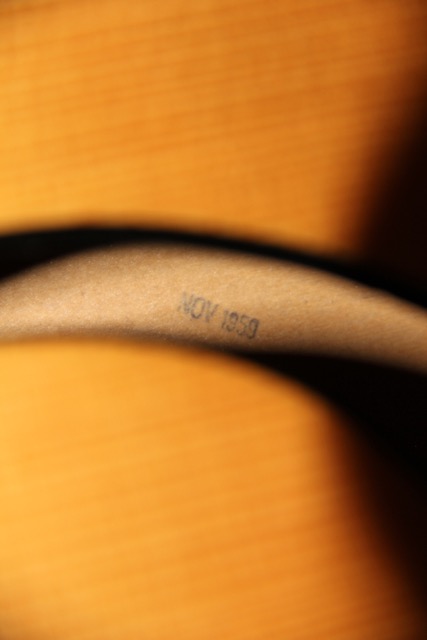
Month and Year of manufacture is ink-stamped (quite small!) inside the Archtop models, on the inside face of the backplate, directly beneath and visible through either (or often both) soundhole(s). It is usually very faded and faint, and hard to locate and read - try using a very bright torch!
ISANA Archtop Models, and Speculative Timeline 1951-1974
Josef Sandner is believed to have produced these guitars either alone, or in a small-workforce workshop. Despite the coincidence of a shared family name, he was not related by birth to either Franz Sandner of FASAN Guitars, or Alois Sandner who made ALOSA Guitars. Speculation and evidence abounds as to there having been collaborations, shared suppliers, and mutally assistive business dealings between these three during this difficult time where - fuelled by their shared goals, relative geographical proximities and broad stylistic similarities - 'everyone helped each other'. However there are many distinct yet subtle differences in the details of the output known from these brands...
That said, there are also many other similar guitars that display 'Isana-like' features, but which bear no branding, or a variety of other names, such as 'Oscha', 'S und S', and even Hopf- It was (and still is!) common practise for a distributor or even the original seller's shop to add their own perfectly professional-looking decal labels to guitars in these days, so the situation is by no means clear cut.
The following photos were archived largely from ebay listings during the 'early' days of the internet, ca 2002-6, with further images added as collectors have sent them to me. Below, I try to make sense of the chonology of these models... but PLEASE NOTE! Year(s) of production as claimed may refer to a model produced for several years either side of that date!
The method I used to develop the following chronology: Pictured guitars are sorted first according to known date stamps, then similar but undated examples were added in as and where the features correlate, with consideration of how this would relate to the stylistic changes with popular worldwide trends in guitar design, ie: full body jazz guitars> cutaways added> thinline bodies with floating electronics> move to electric beat guitars and budget plywood-topped models> double cutaway thinline electrics
Note: When I first assembled the following 'chronology', I believed the date of manufacture could be inferred by the style of tailpiece, but it appears Plain, Lyre, & Harp forms were all readily available from the same supplier continuously throughout the 1950s/1960s. Since the modest cost of a plain unit would be tripled for Lyre or Harp form, it is more likely to be an indication of the manufacturer's designation of Standard or Deluxe model. (Also, one should bear in mind that these tailpieces are very easily swapped!)
c.1951-54
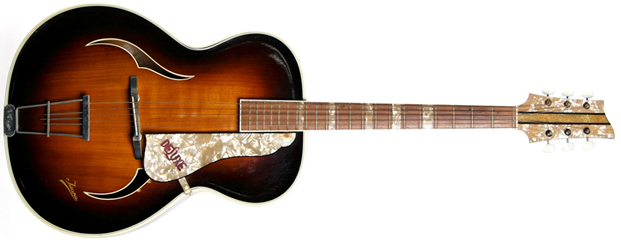
Medium-bodied 'Deluxe' Non-Cutaway Models
Glitter Headstock Veneers with thin-stripes, Lyre-form Tailpiece
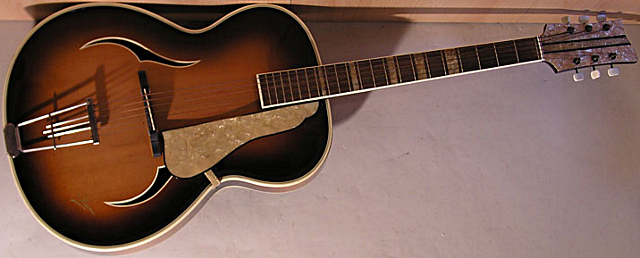
and a similar example:
c.1953
Cutaway Models introduced
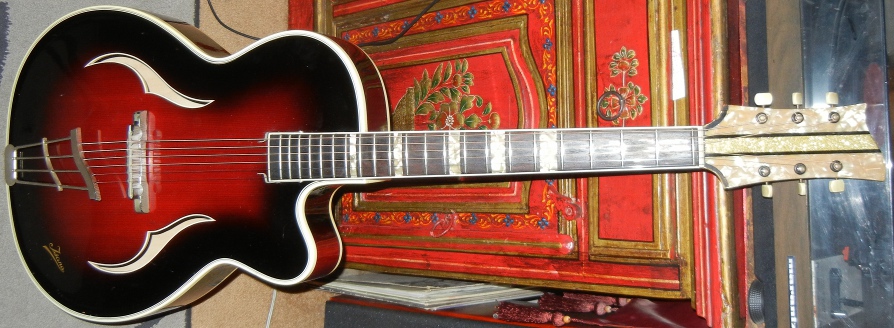
pickguard shape is inconsistant, and with two mounting brackets?:
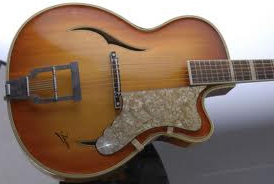
c.1954-56
Still with glitter on their headstocks, but the black stripes are becoming tapered
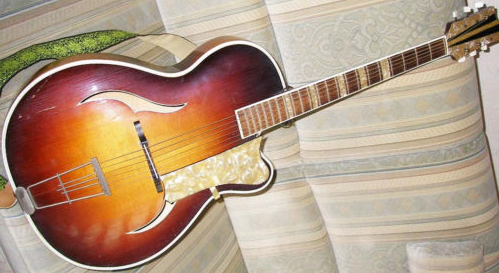
above: Dated Dez 1954 - Body Stamp
below: no datestamp recorded
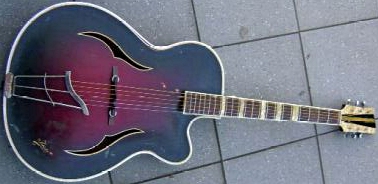
Below: Headstock veneers come to a sharper point on this example, which otherwise looks like an early 'Elvis model(?). No date-stamp reported.
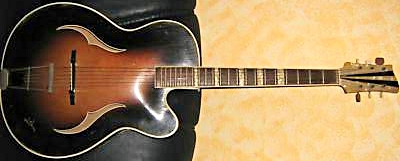
Non-Cutaway Model
Dot-Markers as used by Fasan, simplified headstock veneers and tailpiece suggests a budget model, traditional f-holes...
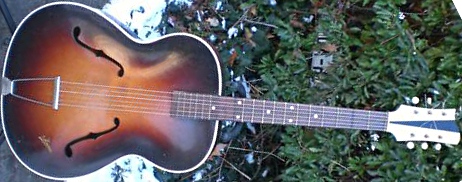
Unclear date stamp reported as either Sept 1954 or 1956?
c.1956-58
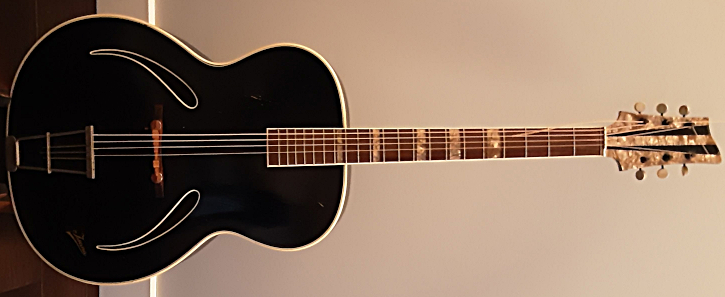
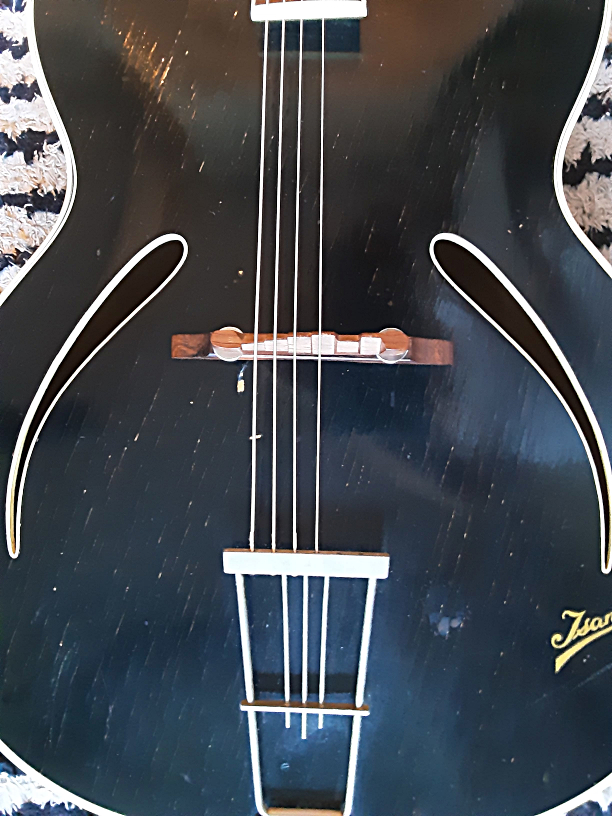
Black (above) and tobacco-burst (below) supplied with no date information
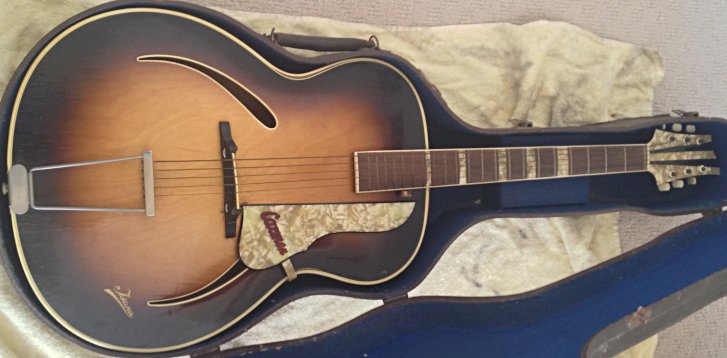
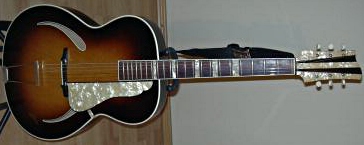
Photos supplied with unverified dates of "1956" above, and "1958" below
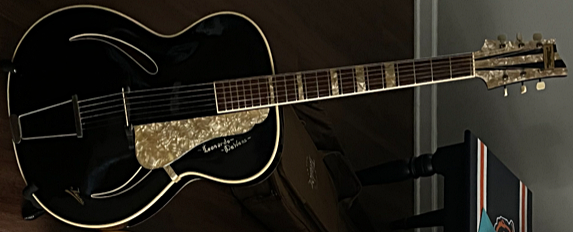
Similar cutaway model, but glitter on headstock, different tailpiece and pickguard shape. Also note 6 fingerboard inlays, including 3rd position, which I usually would associate with Gustav Glassl/Hopf models(?):
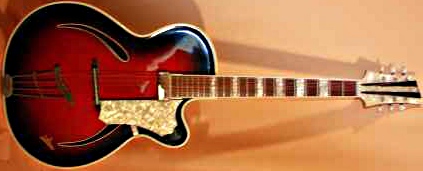
1956-61
The 'Elvis' Models produced
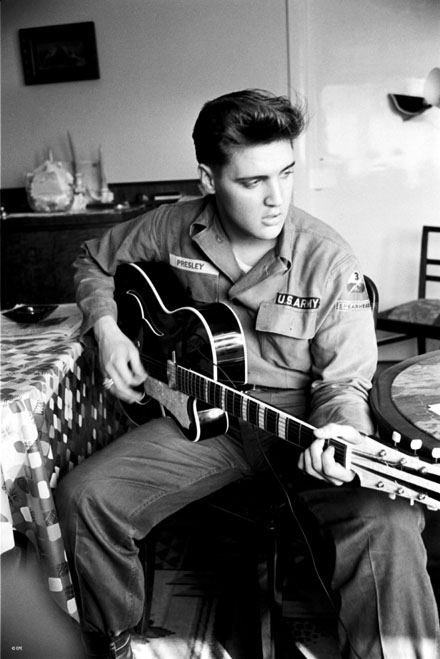
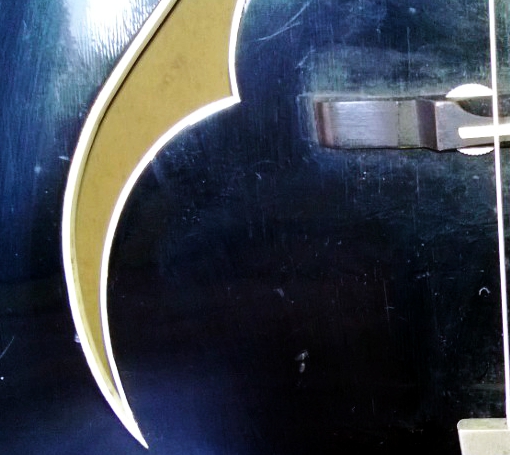
Of all the ISANA models produced, the most iconic and desirable is the stylish black-lacquered archtop owned by Elvis Presley whilst stationed a few miles away in Bad Nauheim, on the other side of Frankfurt, Germany 1958-1960.

"Elvis' father Vernon bought the guitar on 20th December 1958 at the music shop 'Hummel' in Frankfurt for a price of DM 225,00, and gave it to Elvis as a Christmas present; a noble instrument finished with black piano lacquer. Later, Elvis added a floating neck pickup to the instrument and played it through a Dynacord amp."
(Quotation translated from http://www.elvisforever.de)
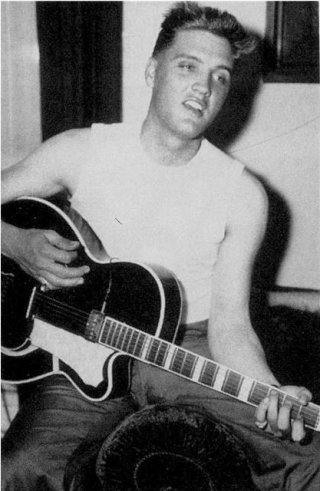
For decades (until as late as 2004) this guitar's maker was notoriously unidentified in the Elvis fan and guitar collector worlds.
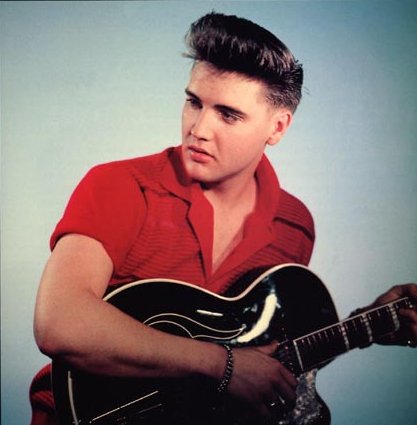
In 2006, a guitar alleged to be Elvis' personal guitar came on the market mistakenly described as a 'Jsana' through a mis-reading of the company's admittedly confusing logo. A fanciful press-release from the time claimed it to be 'possibly the only remaining example in the world'. This guitar with it's dubious provenance (and brutally added humbucker pickup!) repeatedly failed to sell when offered by Heritage Auctions. It was subsequently loaned for display at the Memphis Museum of Rock 'n' Soul.
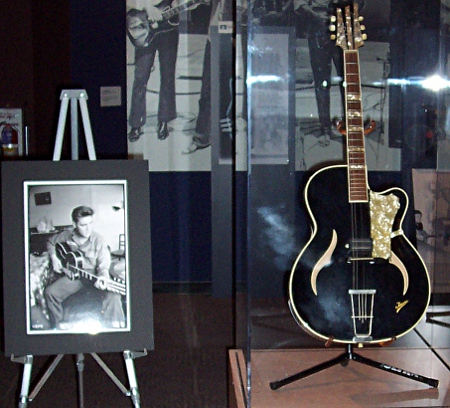
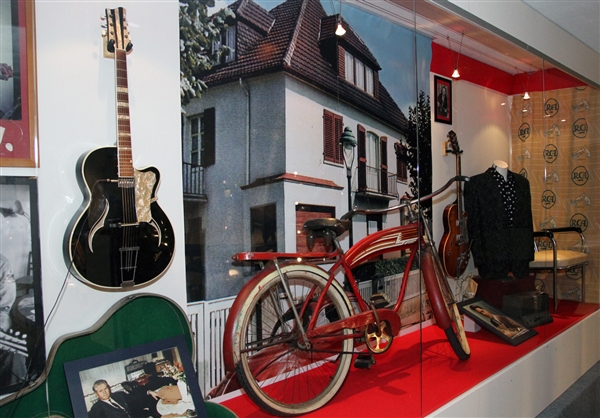
The above guitar is not unversally agreed to be Elvis' own Isana guitar. Scotty Moore wrote that Elvis gave his personal Isana - along with another guitar - to two young fans, and that Elvis also autographed them. It would appear more likely that his personal one has been on display at the newly-opened Elvis Presley Museum Dusseldorf since 2012 (below)
Timeline of the 'Elvis' model pt 1, 1956-59:
Since the known production date of the 'Elvis' model spans 5 years (OKT 1956- MAI 1961), it seems a reasonable ballpark figure guesstimate that perhaps 100 examples were completed per year for an approx total of 5 years = 500 of this model may have been built, with perhaps fewer than one fifth of that (ie under 100 examples) in black. The most common finishes appear to have been the Red-black or Orange-Black Sunburst, with slightly fewer in Tobacco Brown Sunburst or Orange Sunburst. Only a very few examples (I know of seven including Elvis') have surfaced in Black finish. None are yet known to me in Blonde or Natural finish, which is strange.
***DO PLEASE NOTE that these numbers are pure speculation based upon what I imagine a small (assumed under 6-person) team could produce, and could easily be inaccurate by a factor of 10 in either direction!!!***
Earliest known black 'Elvis Model", dated OKT 56
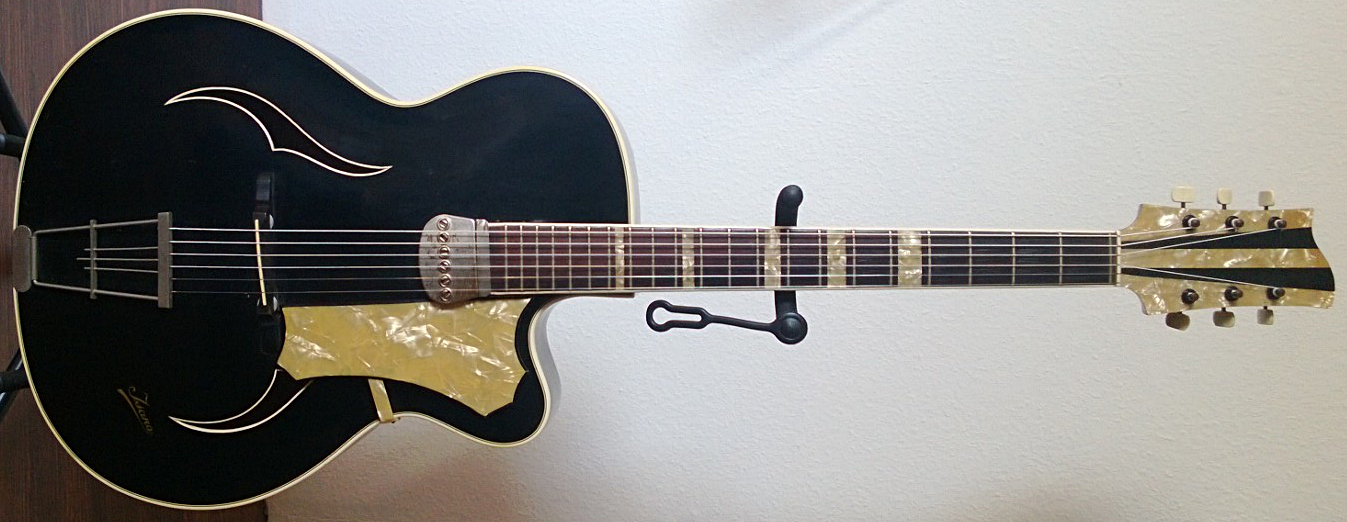
Noted variations are few, but headstock proportions vary, possibly as a result of the handwork involved. Earlier headstocks are wider at the tip, and more paddle-like, while earlier tuner buttons are more squared becoming rounded later on. Headstock ferrules on early examples may be painted black, or white, bt later are usually bare polished metal.
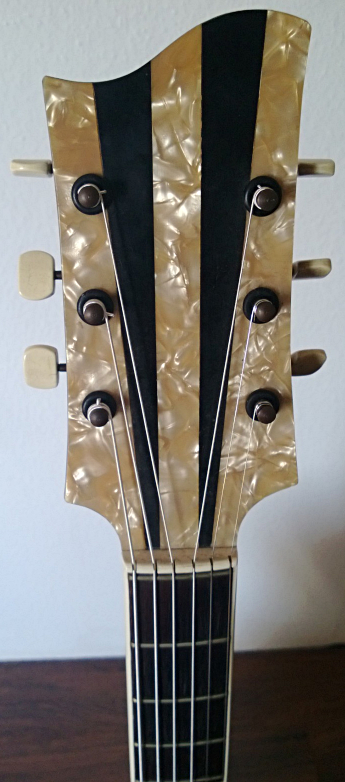
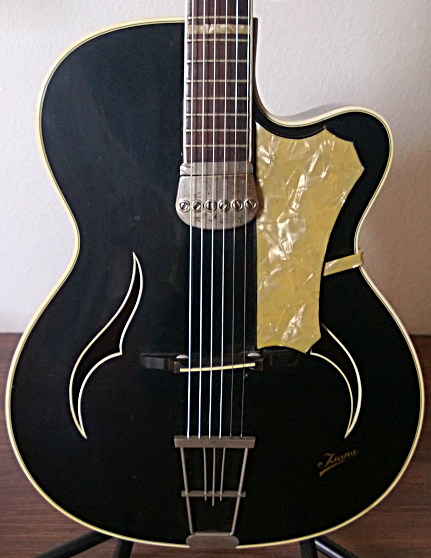
The below example (my own) shows the production date, 'NOV 1957'
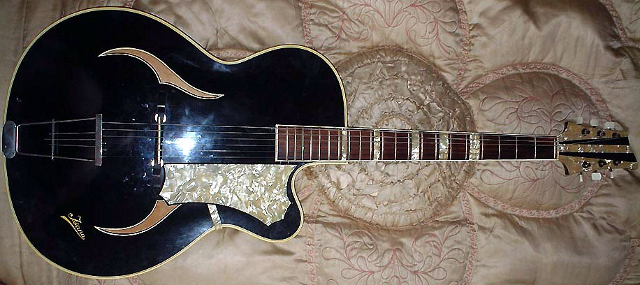
The next example I bought and sold before I knew about the internal date stamps. A close comparison of these two examples revealed different curves, points, and general geometry of the headstocks, while the body shape, bindings and other dimensions were very consistant.
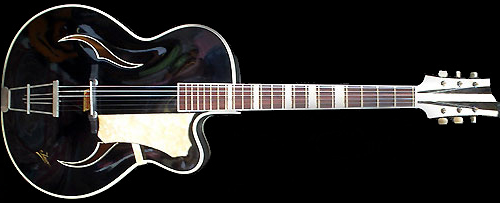
This 'Black Rose' sunburst example bears a date-stamp 'OKT 1959'
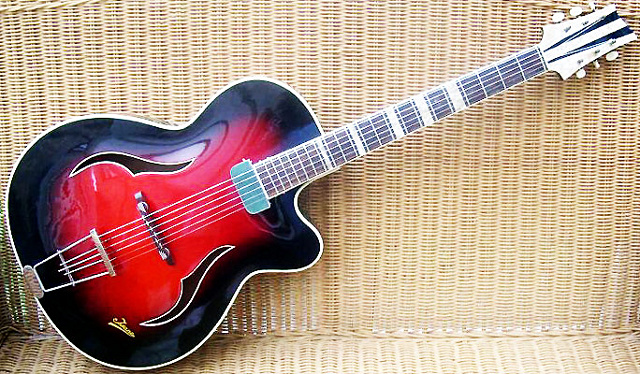
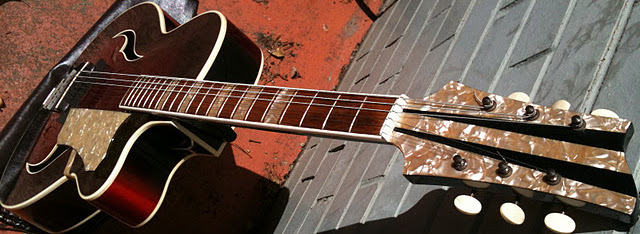
1959
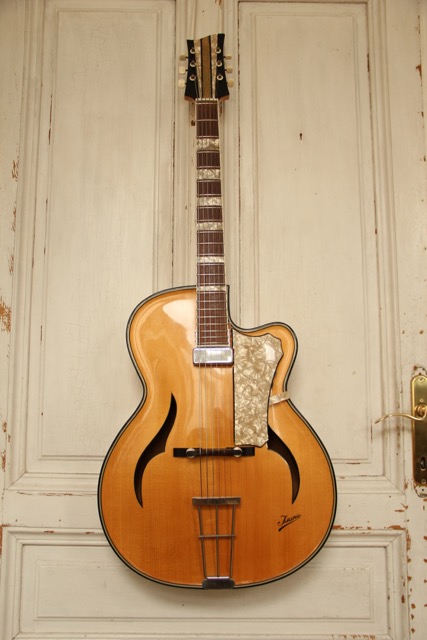
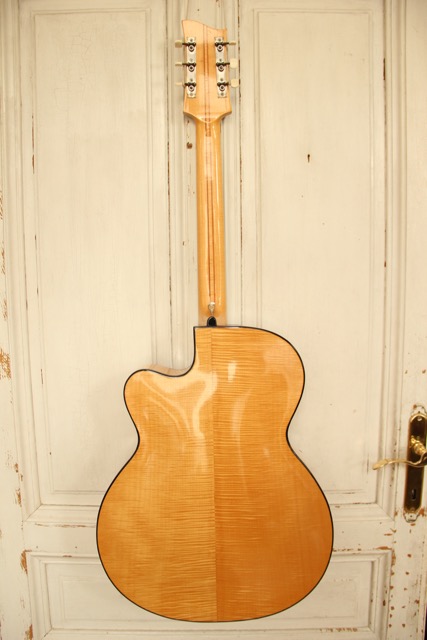
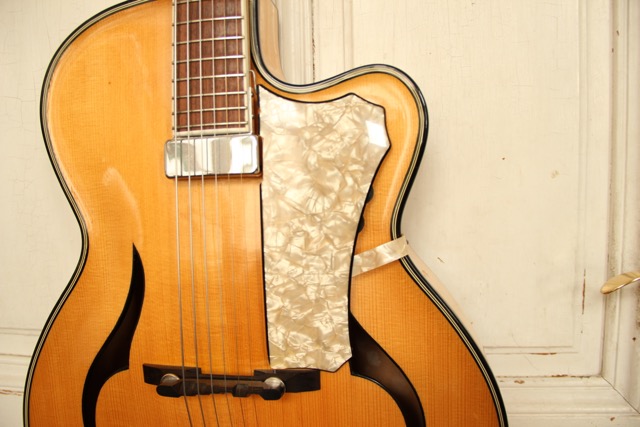
Big-bodied 'Deluxe' Single Cutaway Blonde Model
Glitter Headstock Veneers with thin-stripes, internal date stamp NOV 1959
Also note 6 fingerboard inlays, including 3rd position
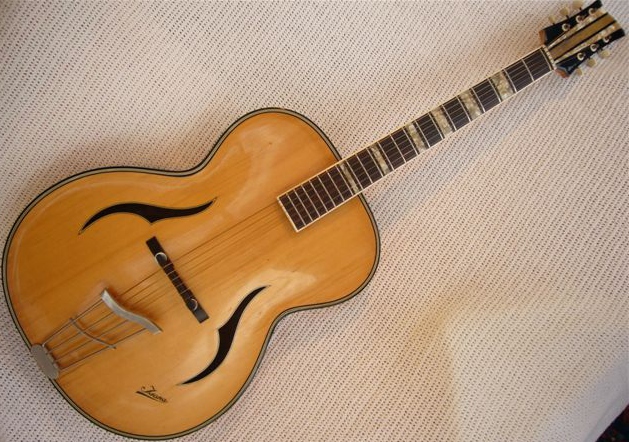
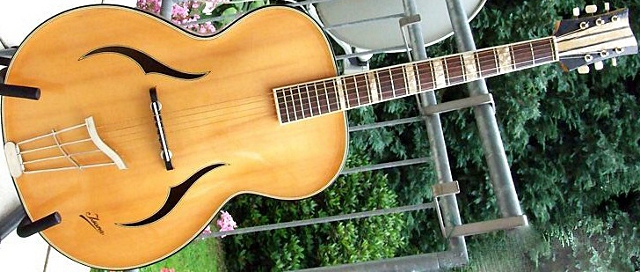
A non-cutaway example below with Harp-Shaped Tailpiece, could be earlier
This example also features 6 fingerboard inlays, including one at the 3rd fret position
1960-61
Orange Bursts, and Stripey Sides: the last of the 'Elvis' models
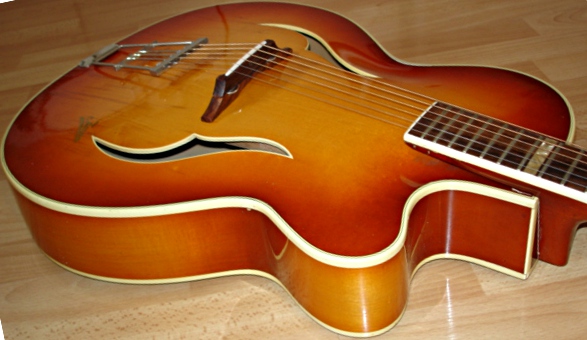
Above: Latest confirmed Elvis Model Date-Stamped May 1961
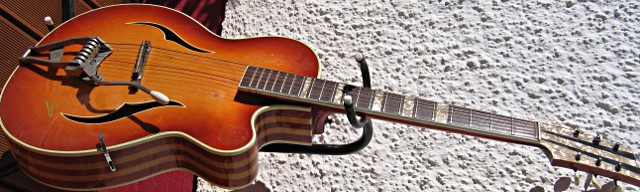
Below: similar example but with striped sides and (added?) era-correct vibrato unit. Probably 1960-61 but no date-stamp recorded.
An example in Black Rose finish bought in Paris in 1962, with first-year truss-rod cover as introduced in 1961:
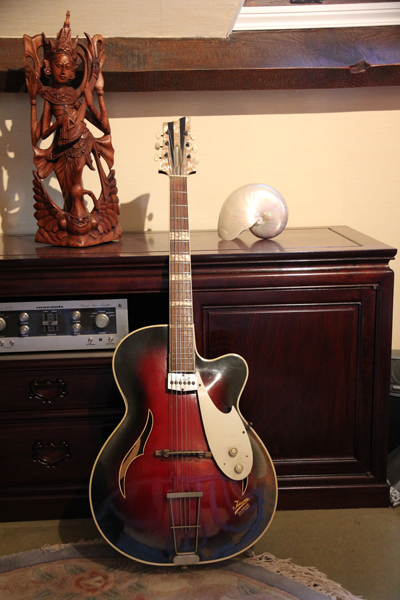
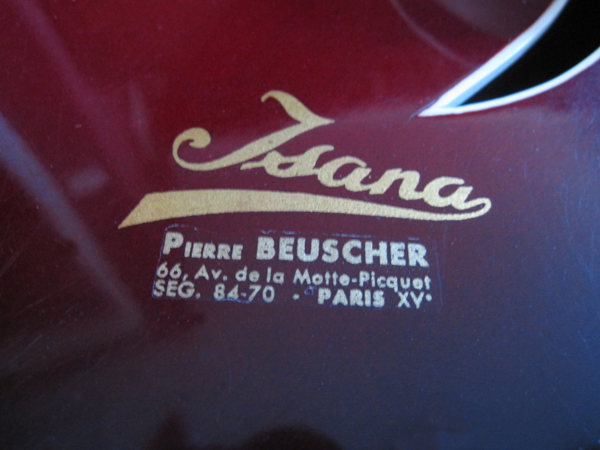
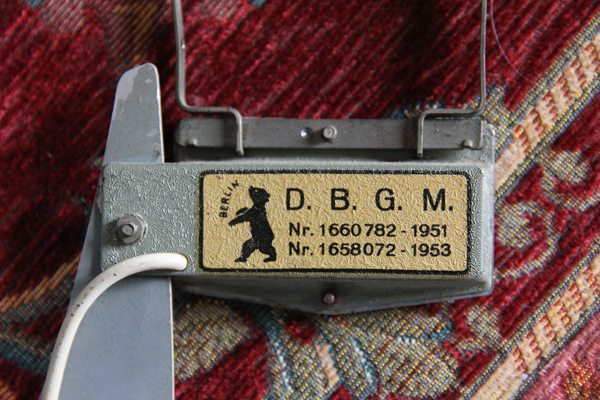
Trussrods introduced, recess covered by Long Metal plate (c.1961 only)
Electric Models Introduced, with floating pickups on Pickguard Assembly, necessitating change of logo transfer position.
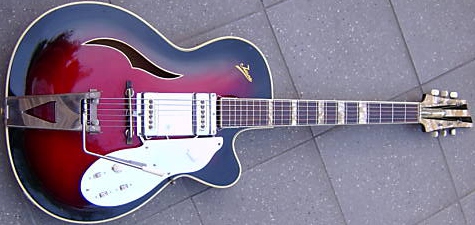
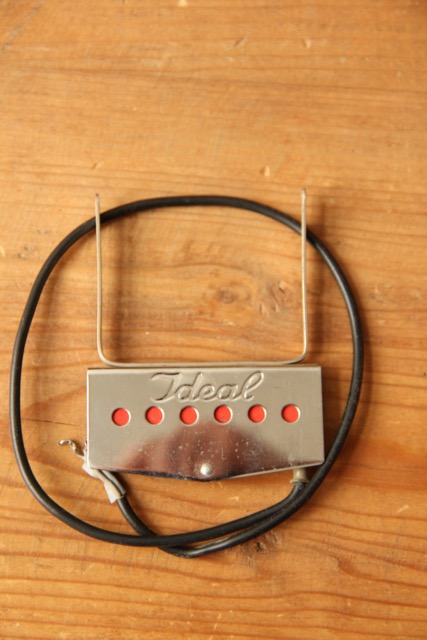
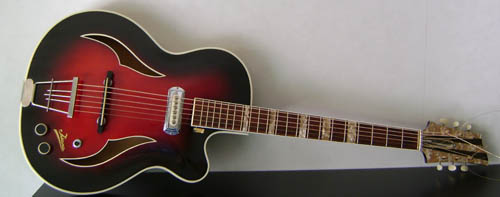
Soundholes take on a wider shape and (Ideal?) Pickups and Controls move from floating to mounted directly on top
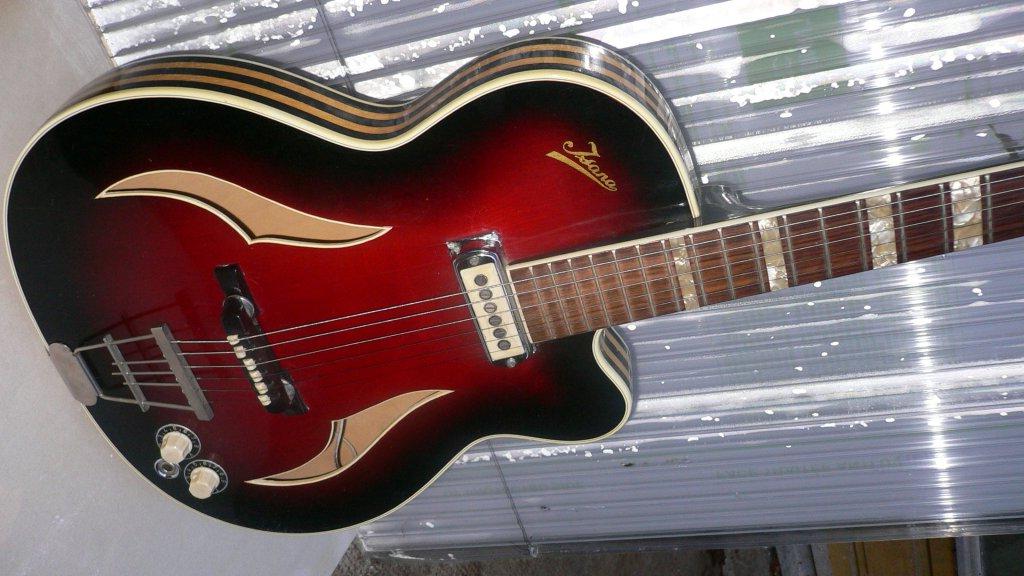
Another with stripey sides and unusual logo-positioning:
c.1962
Metal Trussrod Plate replaced by conventional Plastic Triangle
Headstock Shape Changed
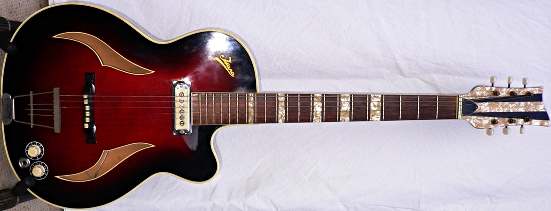
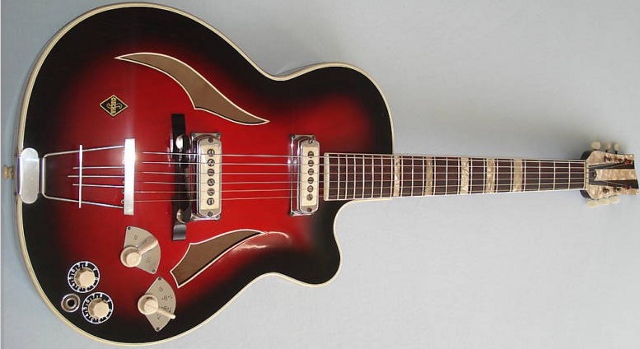
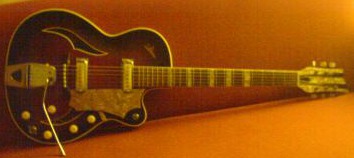
c.1963-6
Thinline Double-Cutaway introduced
Pickguards from now on are 'reversed' direction
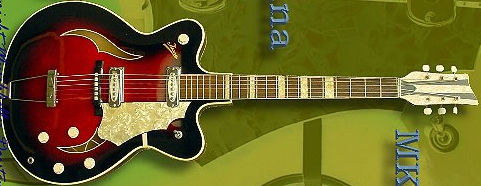
Headstock Veneers Simplified
Offset 'toaster' style pick-ups fitted
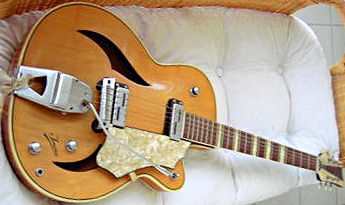
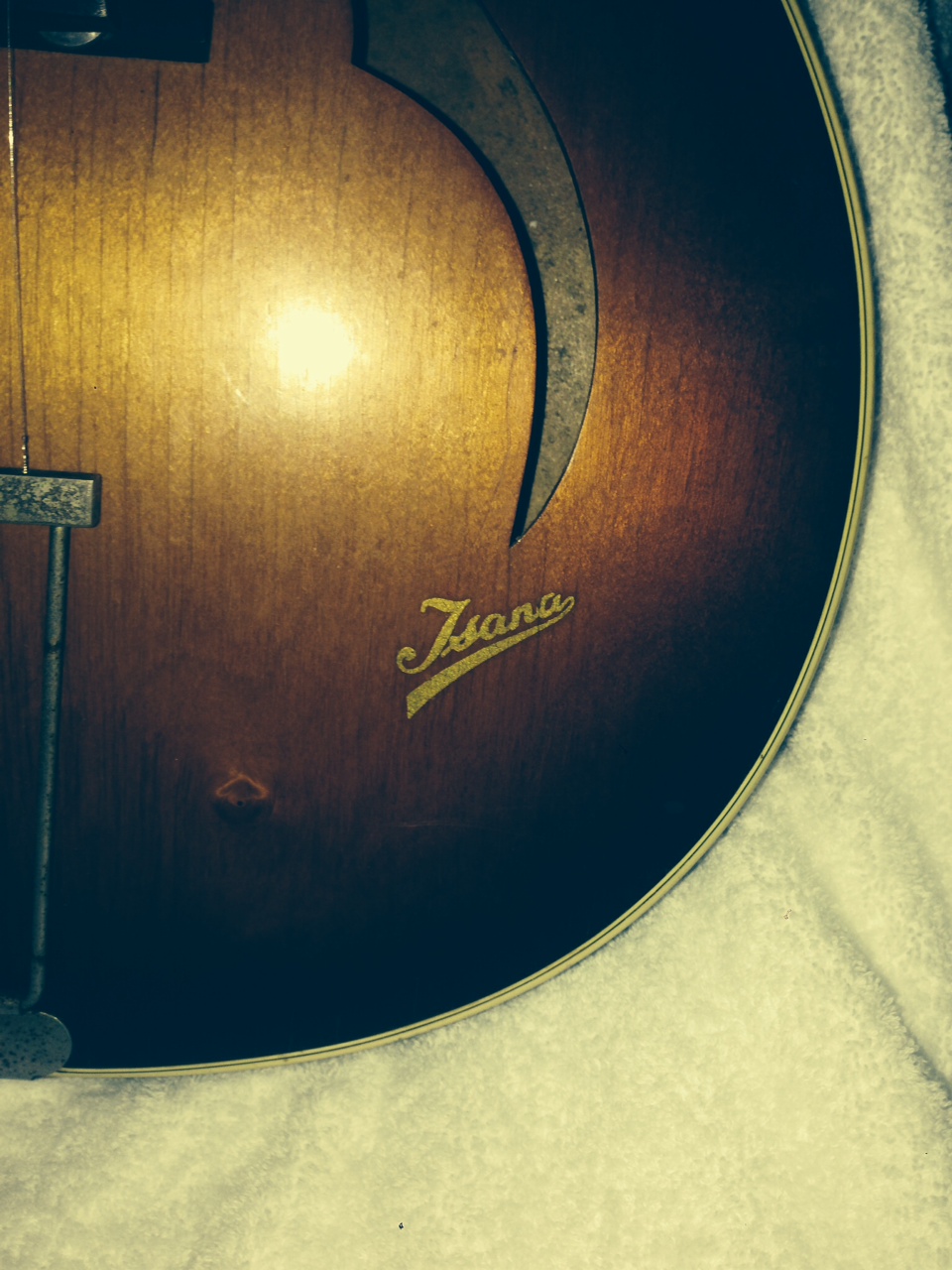
Budget full depth acoustic models: simplified headstock veneers, unbound necks and soundholes. Probably with pressed laminated tops.
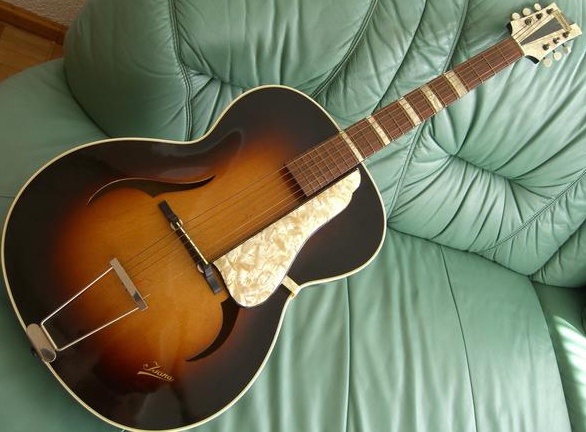
Examples confirmed Dated Jan 1962 and Aug 1966
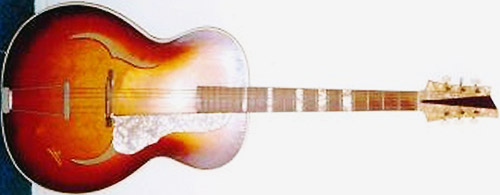
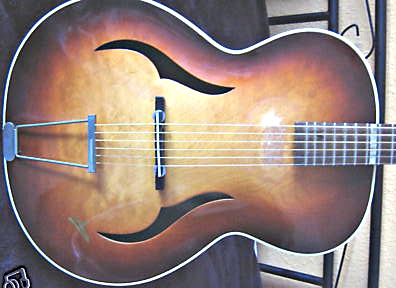
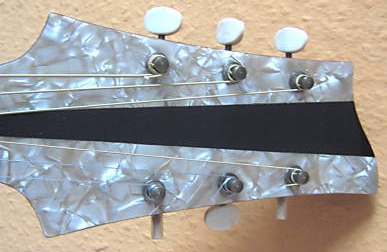
And another:
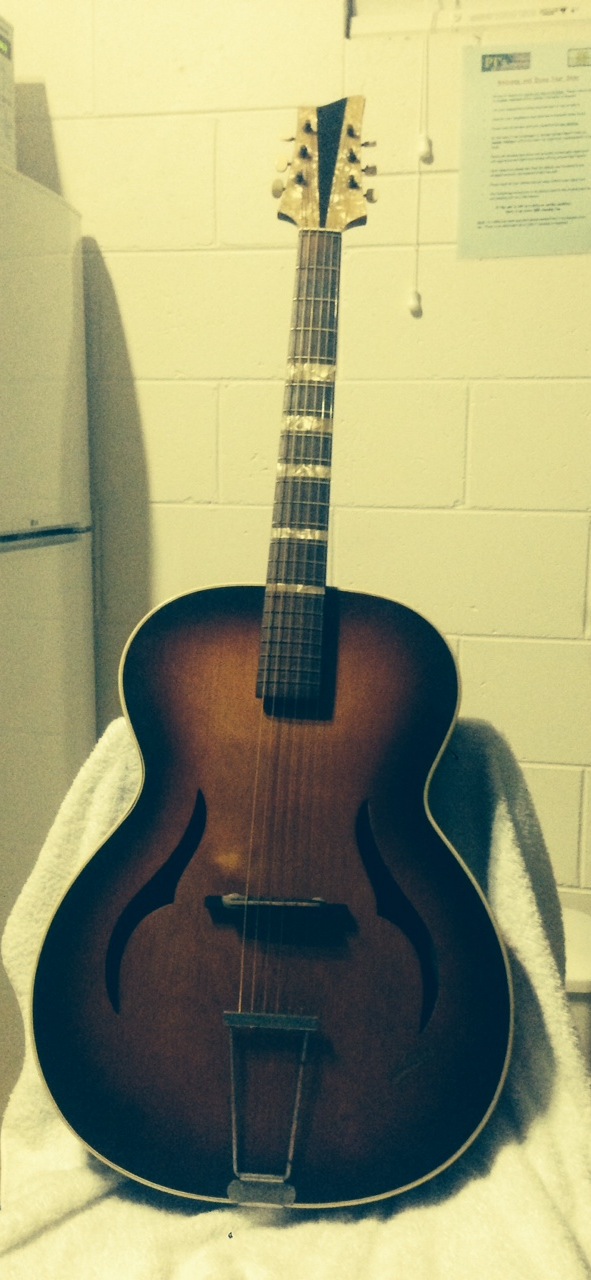
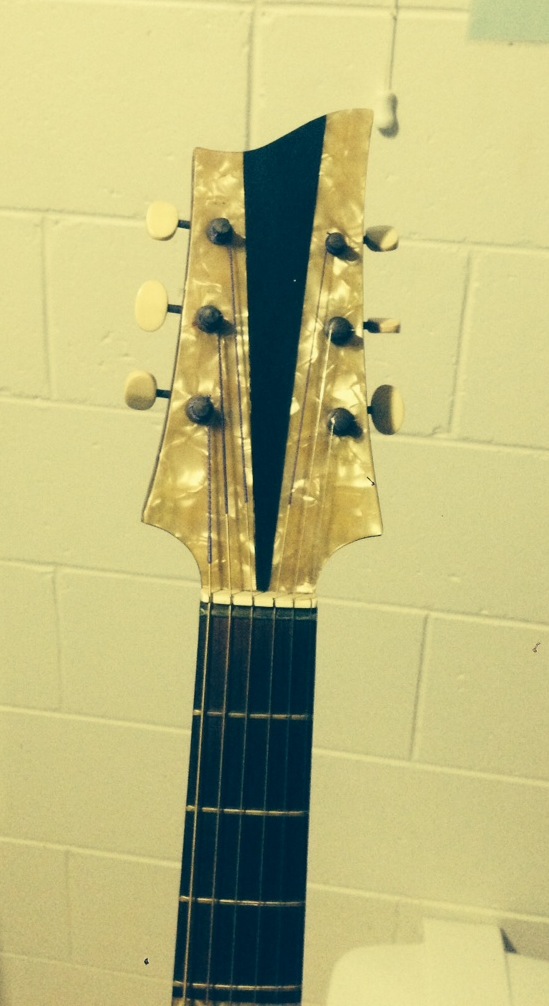

c.1967
Headstock Colour Inverted & Simplified again
Double 'toaster' style pick-ups fitted
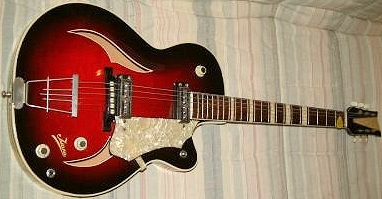
c.1968?
Headstock Decoration very minimal, carries Logo
Dot position Markers (even on third fret!)
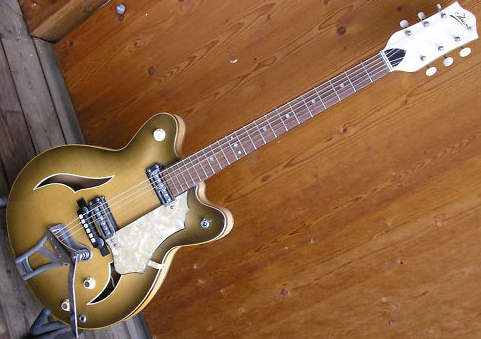
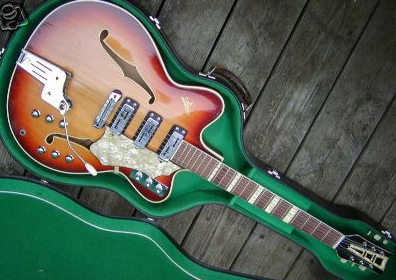
c.1969
Headstock Veneers Ornate on this
Traditional 'f'-holes, triple pickup Double cutaway
Further reading:
CRICRIMUSIC.FR has a page which covers ISANA's electric solidbodies and basses HERE