
REFERENCE & RESOURCE PAGES:
SUPERSOUND (1958) - BURNS-WEILL (1959) - FENTON WEILL (1960-65)
ORMSTON BURNS (1960-1965) - AMPEG (1963-64) - BALDWIN (1965-69)
SHERGOLD WOODCRAFTS (1967-69) - ORMSTON (1968) - HAYMAN (1970-75)
BURNS UK (1973-77) - BURNS ACTUALIZERS (1979-82) - SHERGOLD (1975-92)
FENTON-WEILL
OVERVIEW - STREAMLINE - DE LUXE - TUXMASTER - AMERICAN RANGE
TWISTER RANGE - DUALMASTER - SPECTRATONE - FIBRATONE
HOHNER - BELL - DALLAS - ADVERTS
Streamline Models, 1960-1961
On 20th February 1960, the "Solid Body Electronic Guitar" became the first model officially advertised by Henry Weill:
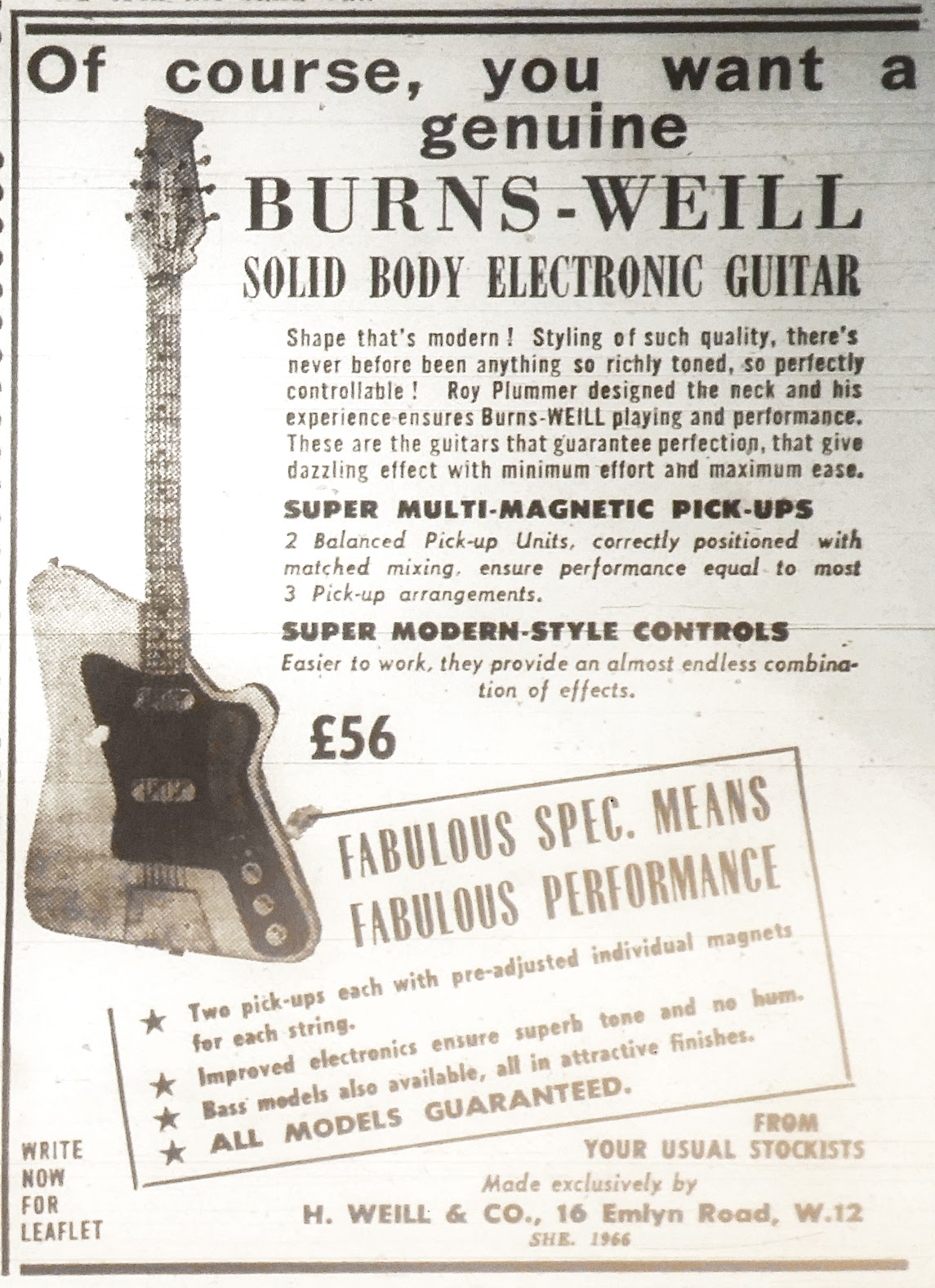
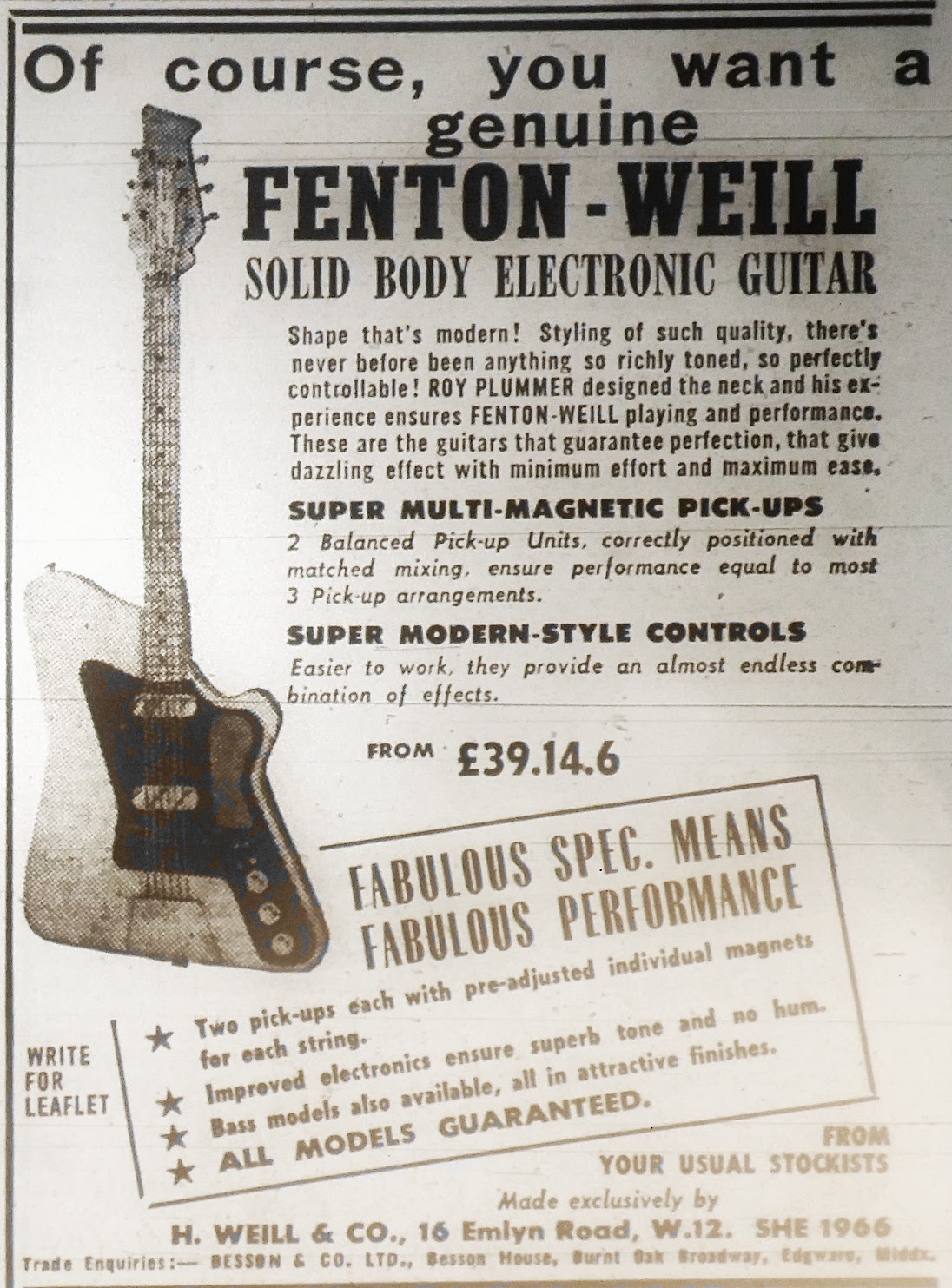
RP1/G "Super Streamlined Solid Body Guitar"
RP1/B "Super Streamlined Solid Body Bass"
and RP2/G "Streamline Deluxe Guitar"
These models evolved from the earlier Burns-Weill Super Streamline RP1 and RP2 models.
Initially, the models continued unaltered, but soon the body's cutaways and pickguard shapes are restyled..
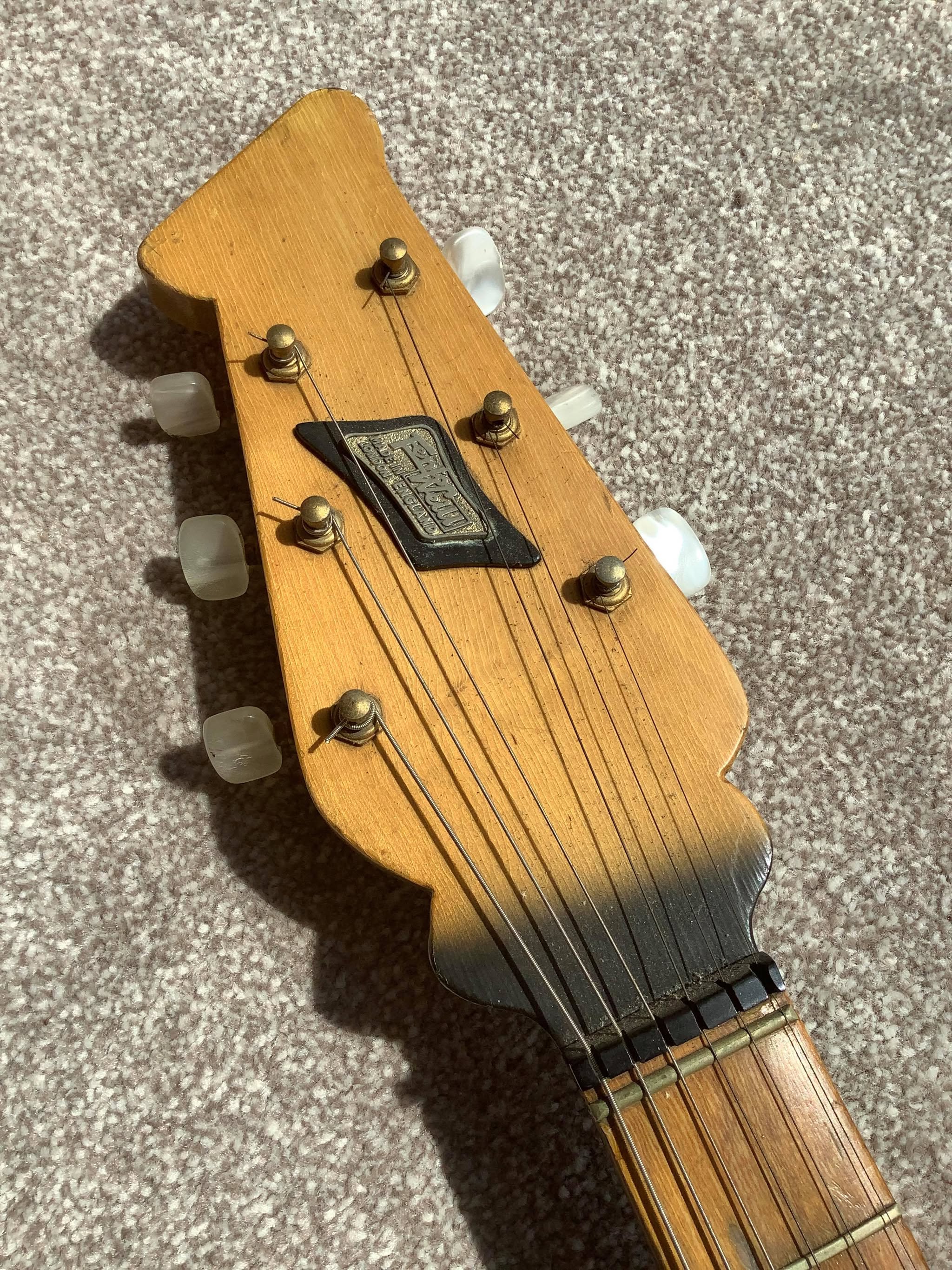
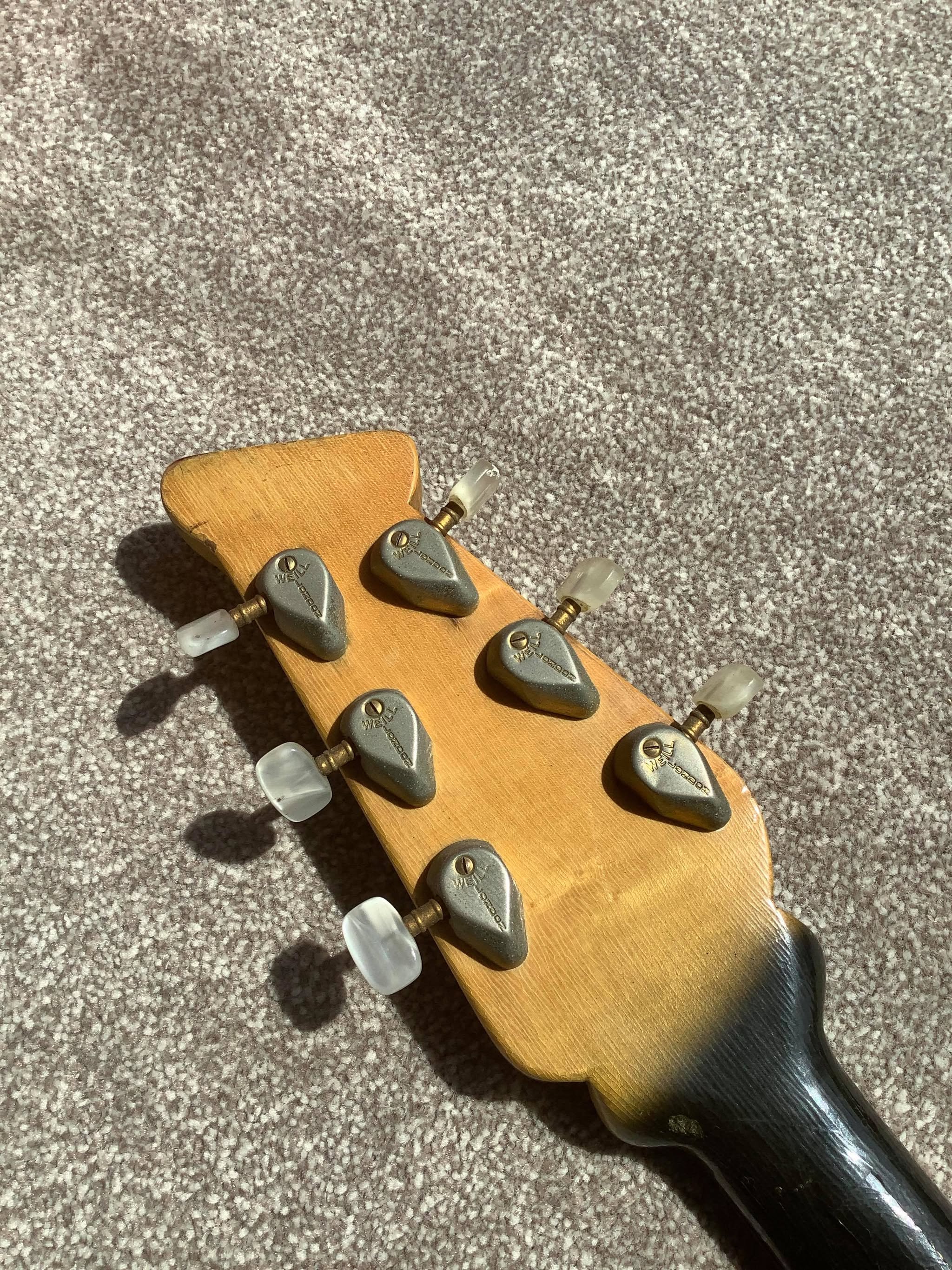
Machine heads change from open-backed Hofner tuners to enclosed Van Gent units branded "WEILL LONDON".
Around 1961 the jack socket moves from the side to the pickguard.
The headstock shape was also revised in late 1961 to a six-in-line style, as the RP1G was Incorporated into the American Range as the 'Twinmaster', and the RP2 became a budget model built for DALLAS to market as the "Tuxedo 6"
1960 RP1/G
Earlier 'more-rectangular' red pickguard shape, plus early tremolo style as seen on 1960-61 Deluxes with no surrounding plate.
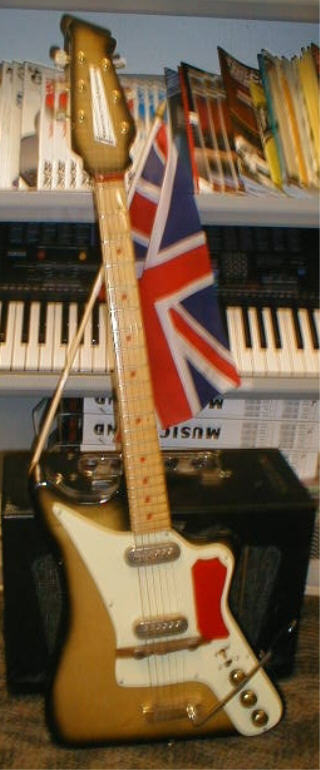
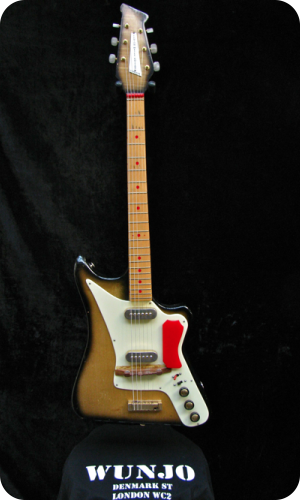
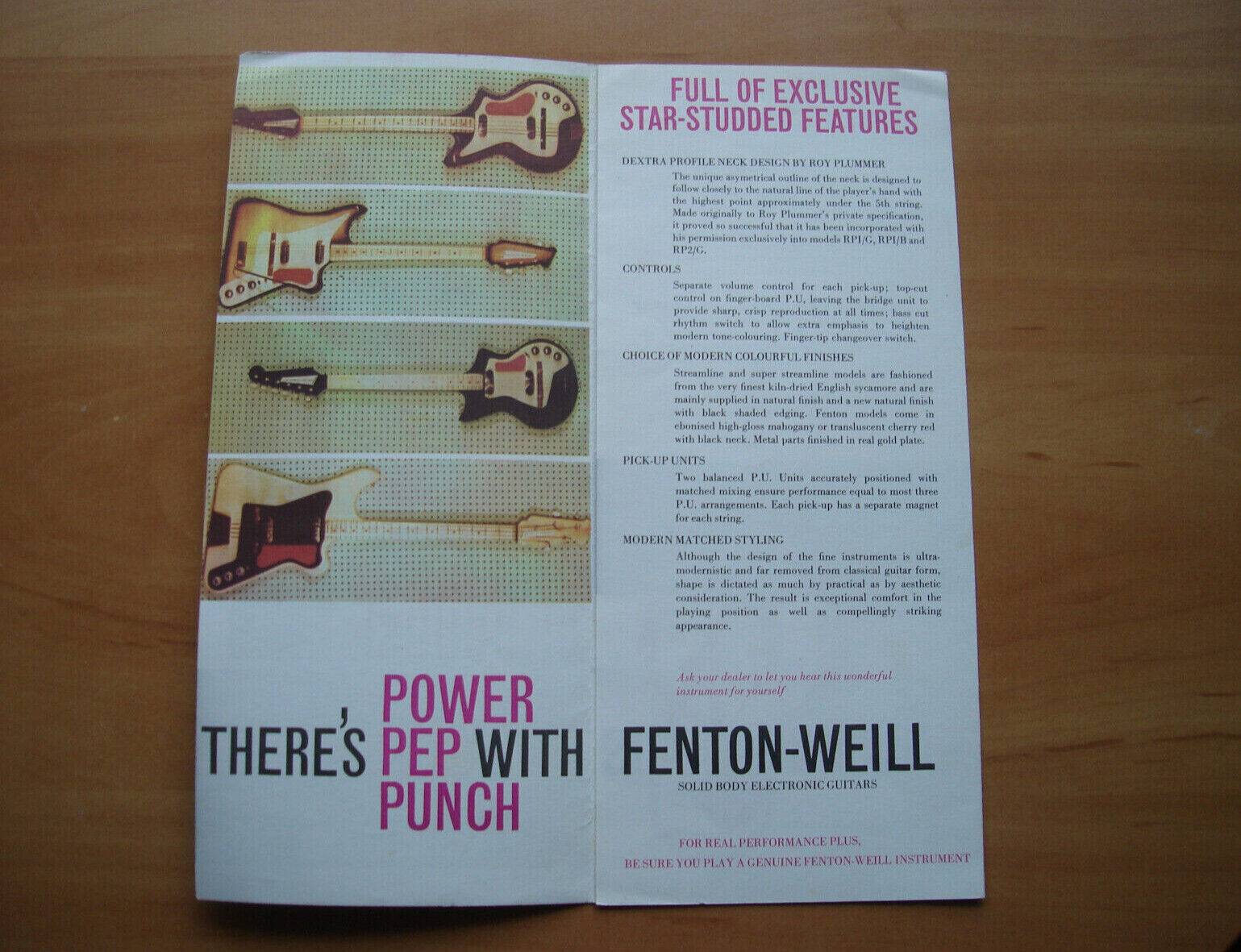
From irregularities in the application of the sunburst finish, this appears to be the instrument pictured in the c.1961 Fenton Weill catalogue below, although the red secondary plate appears differntly-shaped.
Circa mid-1960 RP1G
Secondary plate has become more rounded. Jack socket still side-mounted. Only 21 frets?
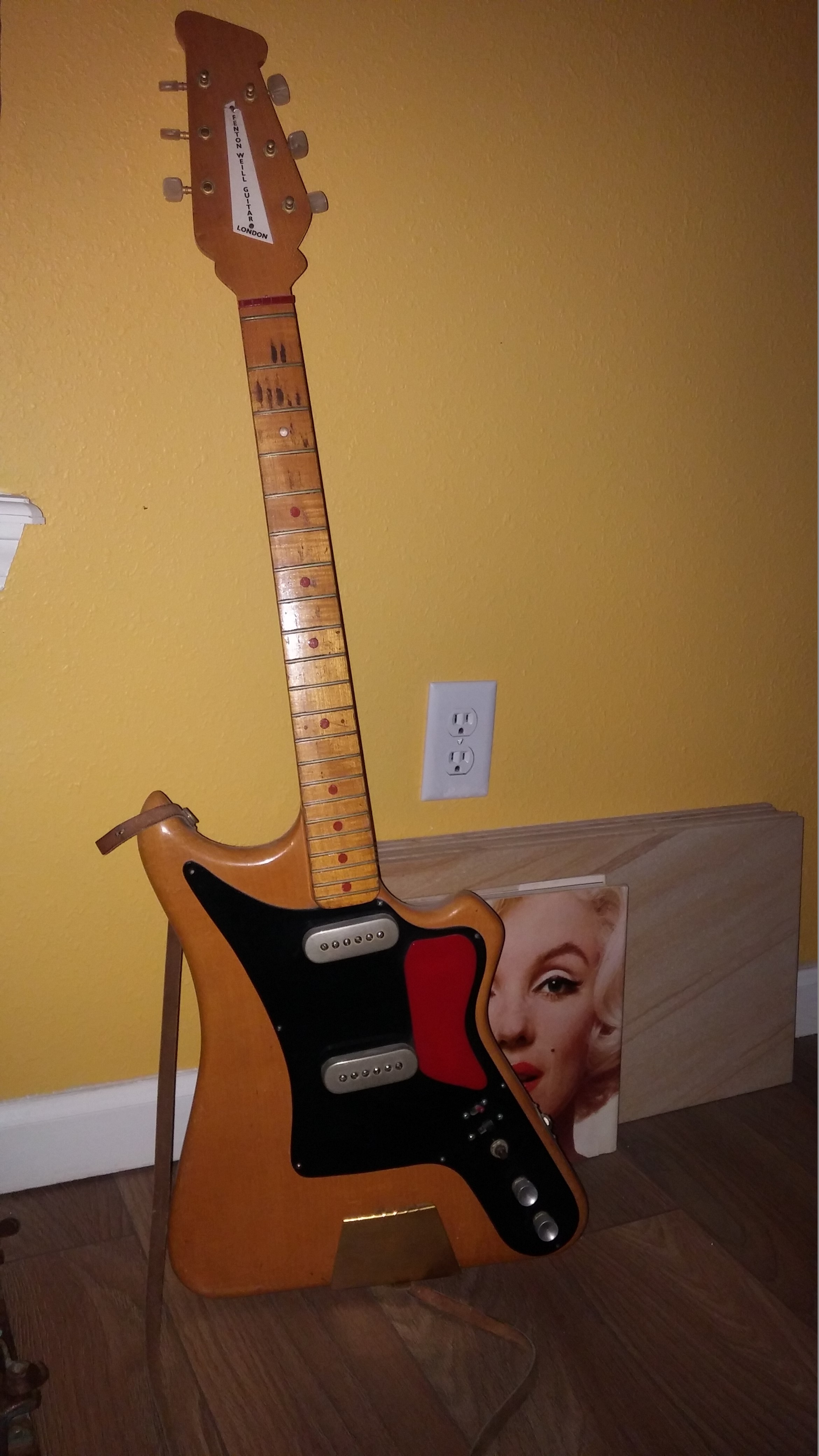
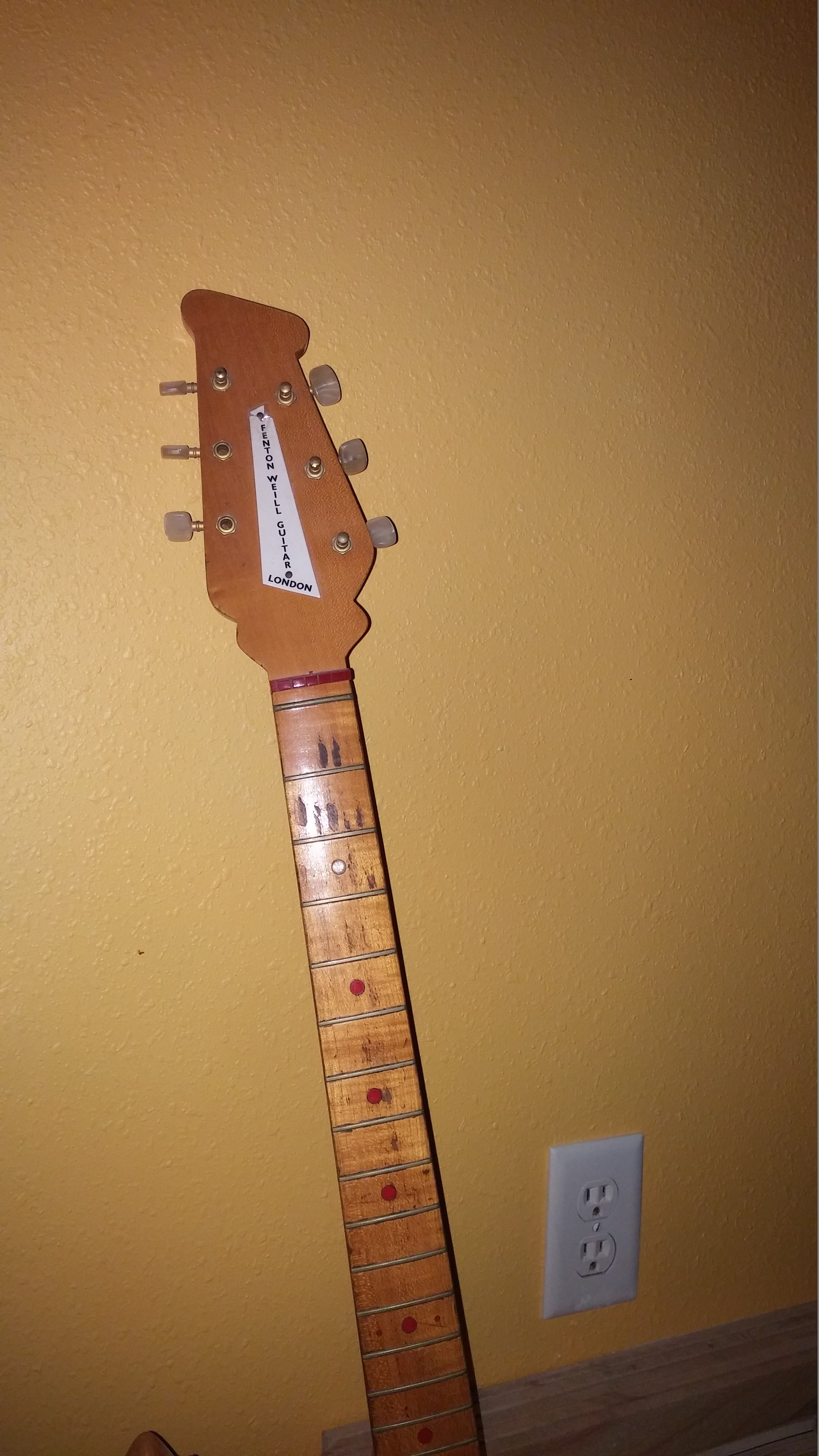
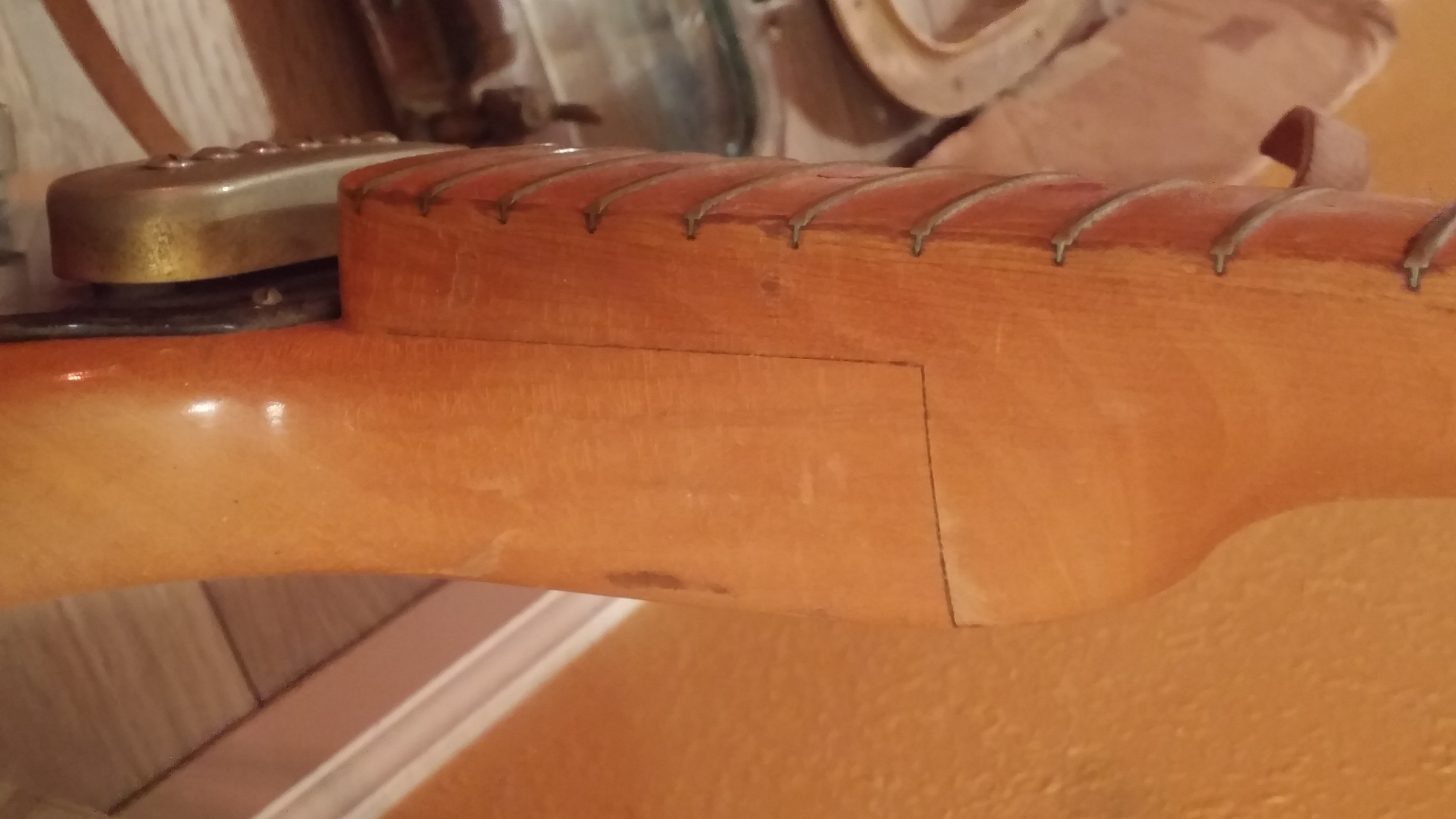
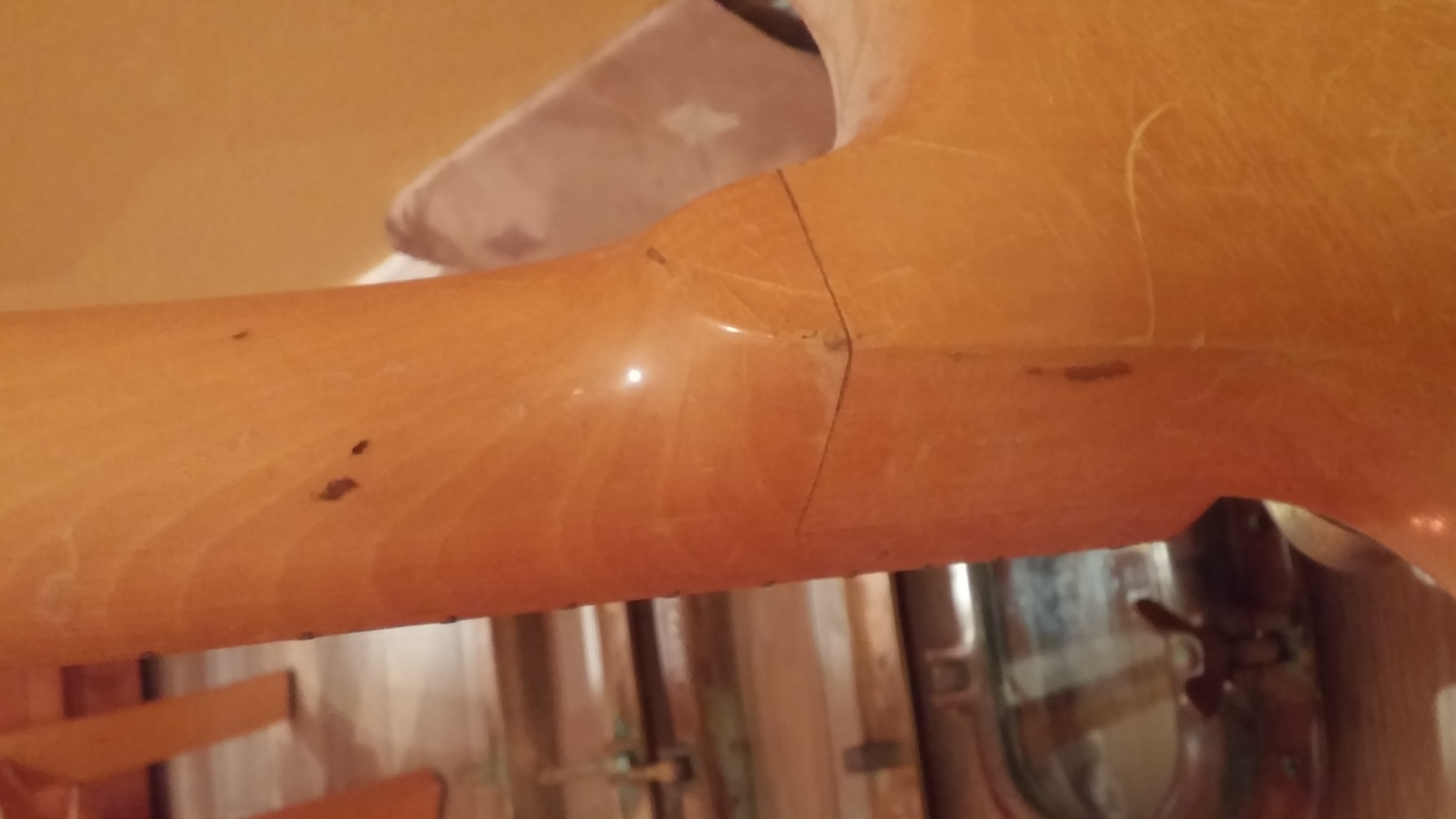
circa late 1960 RP1G "Streamline Super"
This immaculate example features no serial number, but does have an early Symmetrical Vibrato coverplate, also seen on early Amazons from circa May 1961, suggesting it may be from early 1961
Note: soft-heeled neck joint, and rounded headstock transition. No pickup selector switch, early 'T' cross-section strap buttons. Jack socket still on side of body.
Headstock badge outline reversed, points the other way!
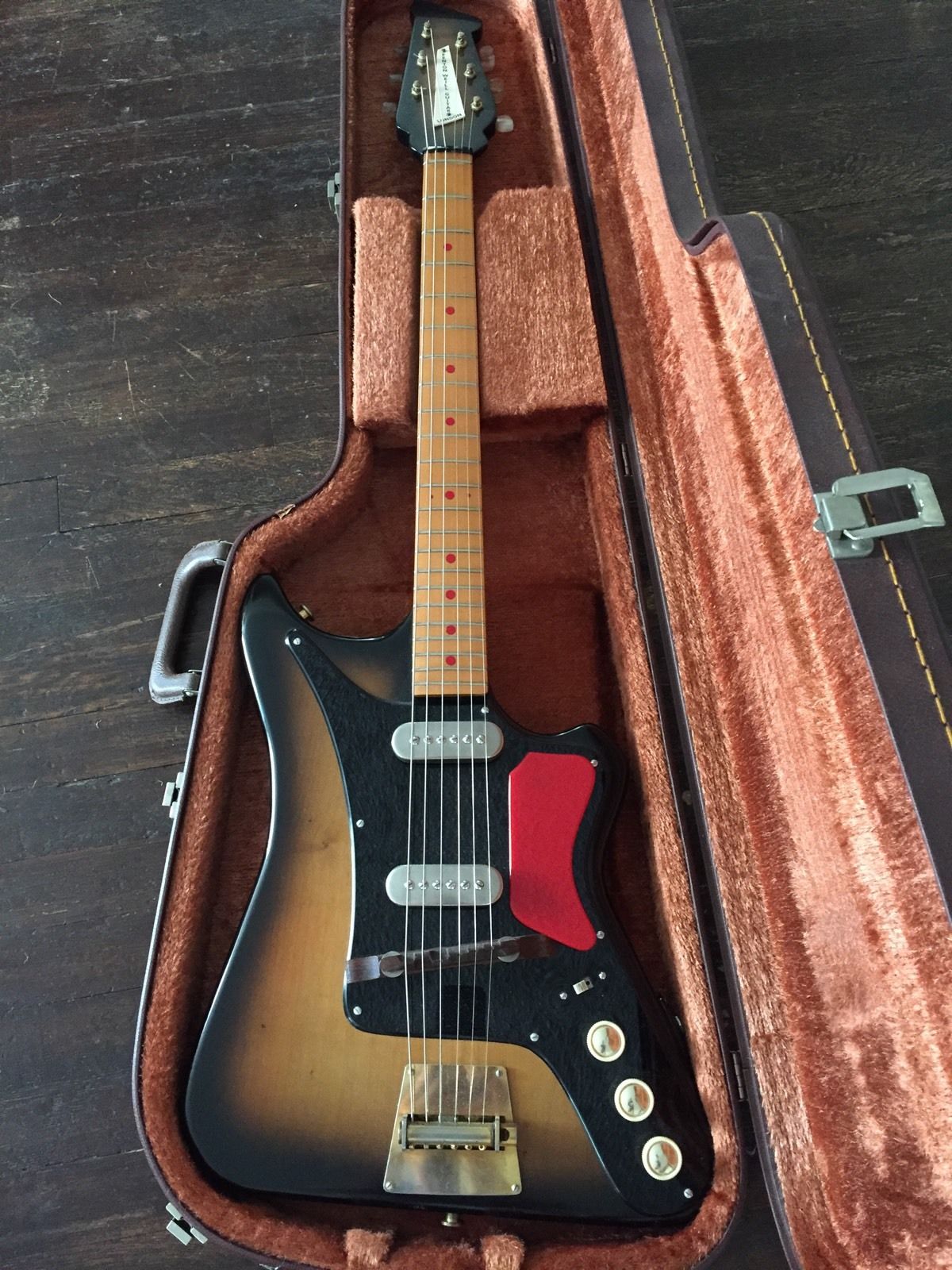
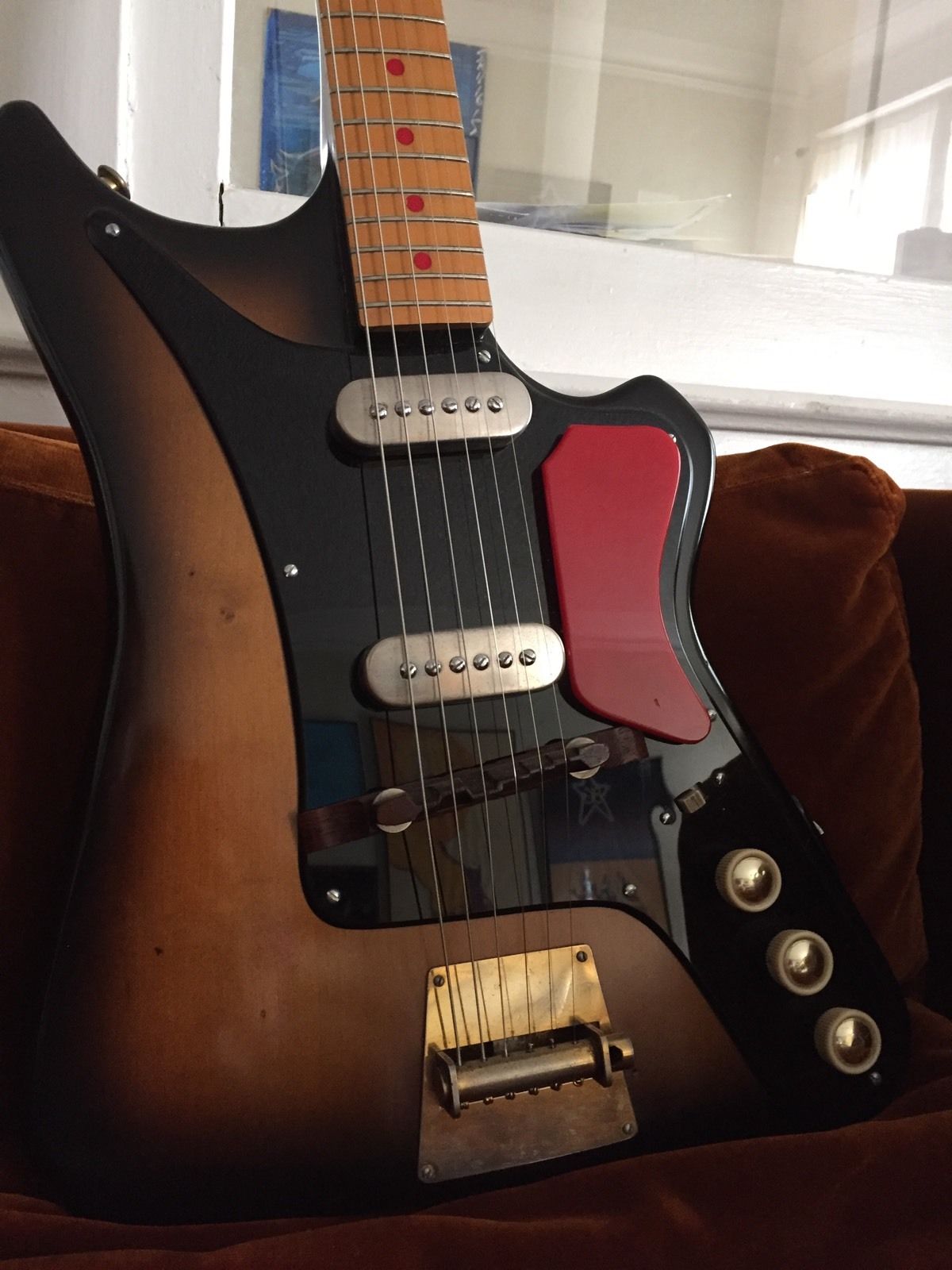
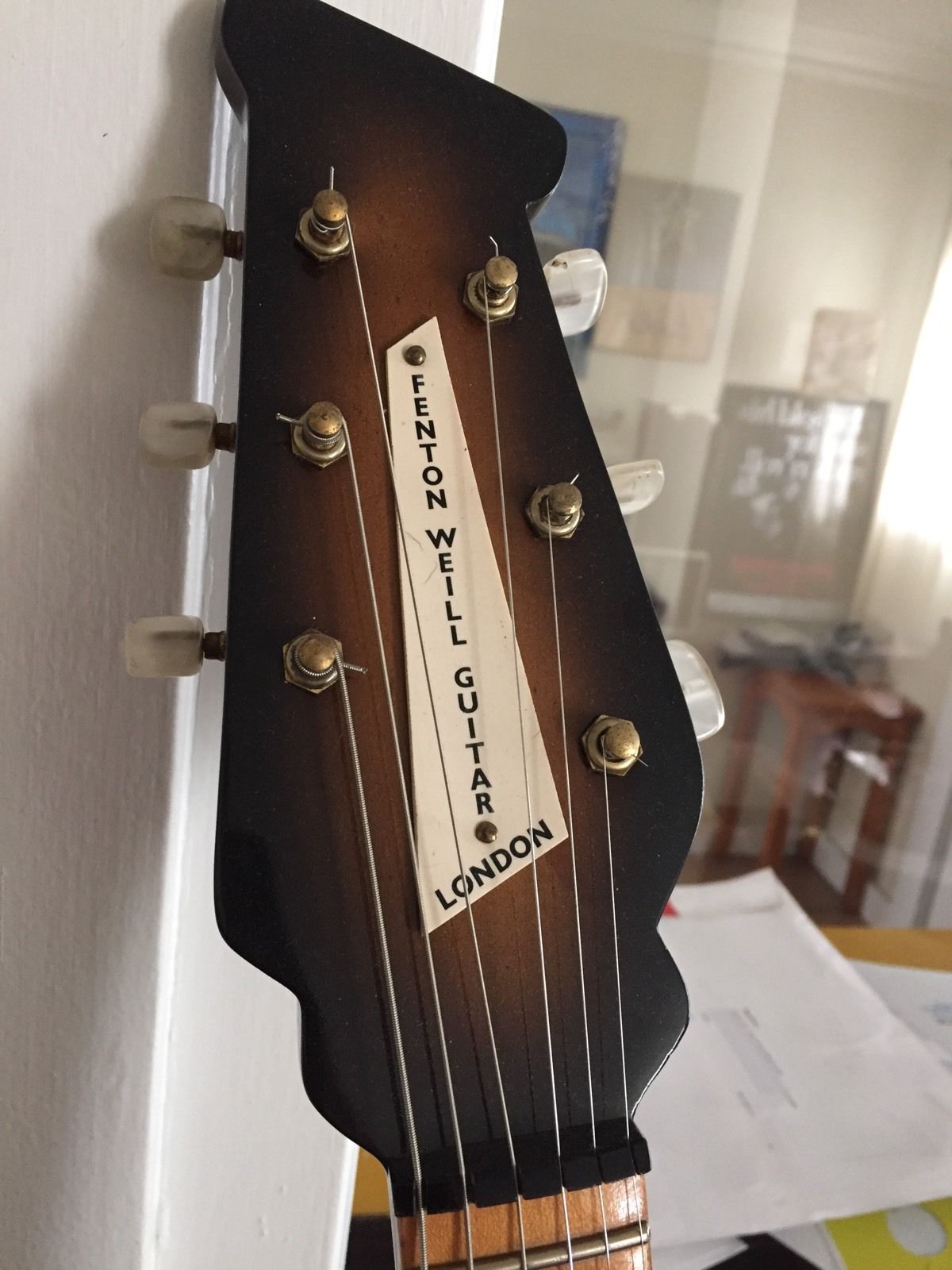
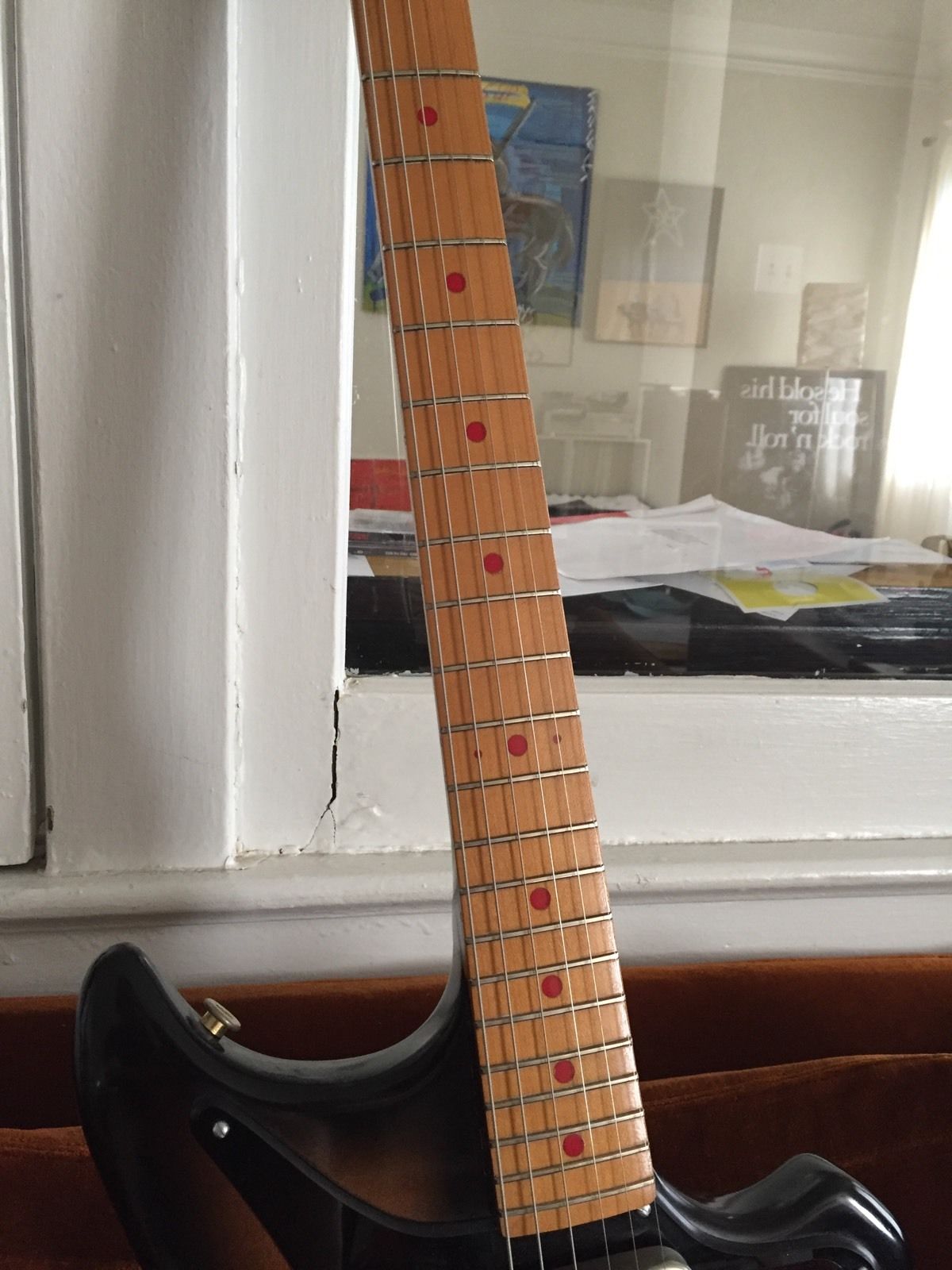
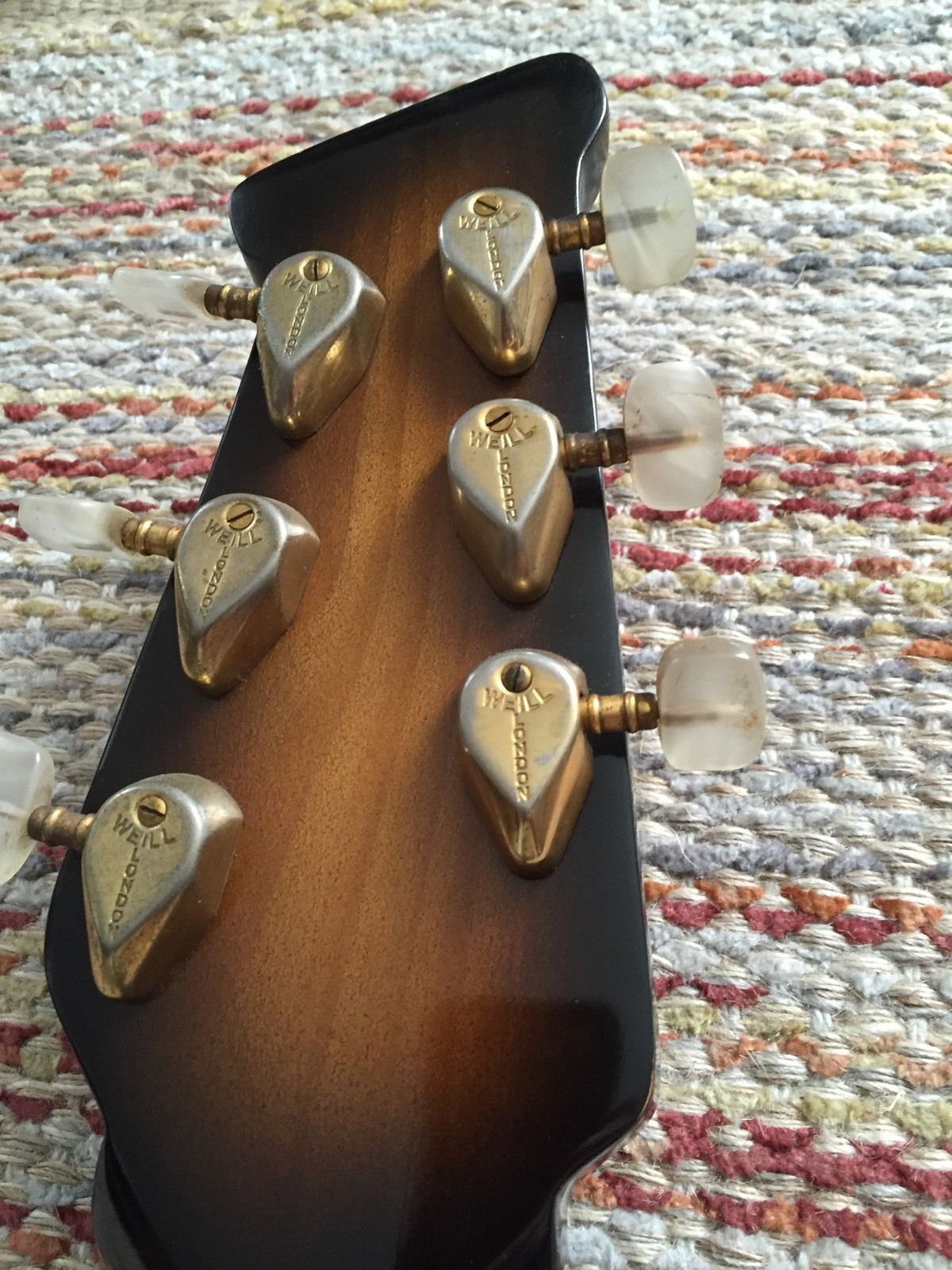
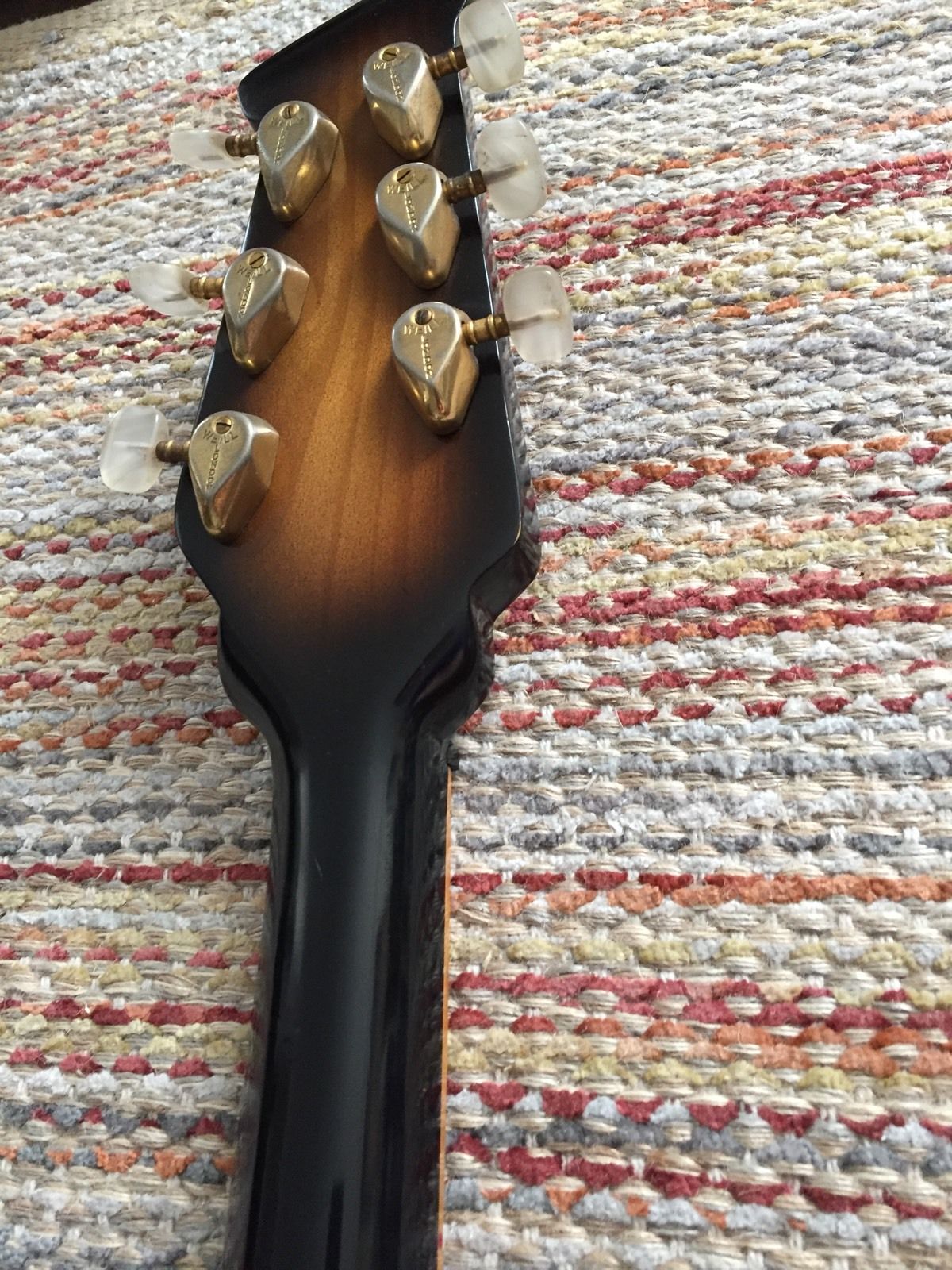
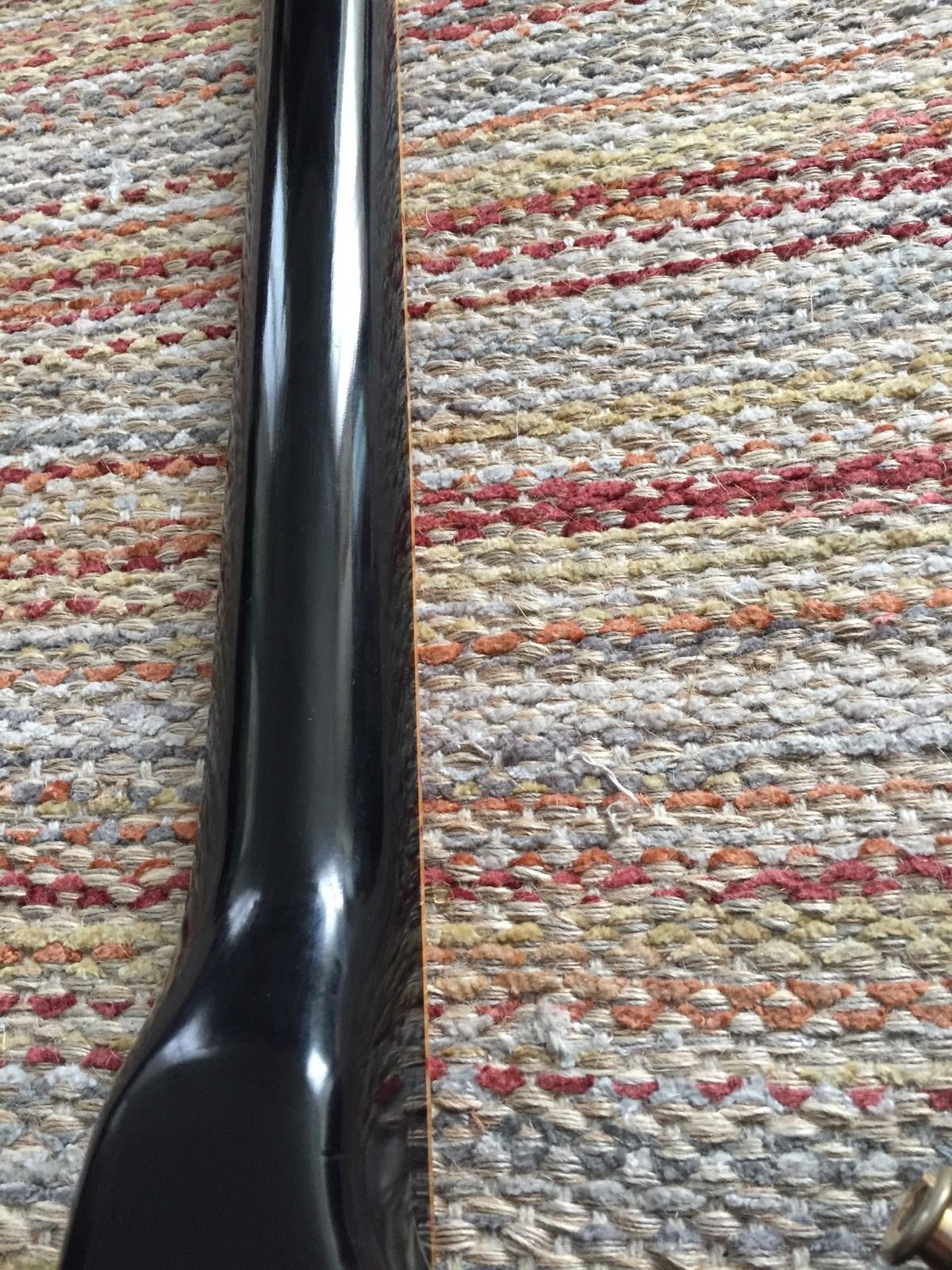
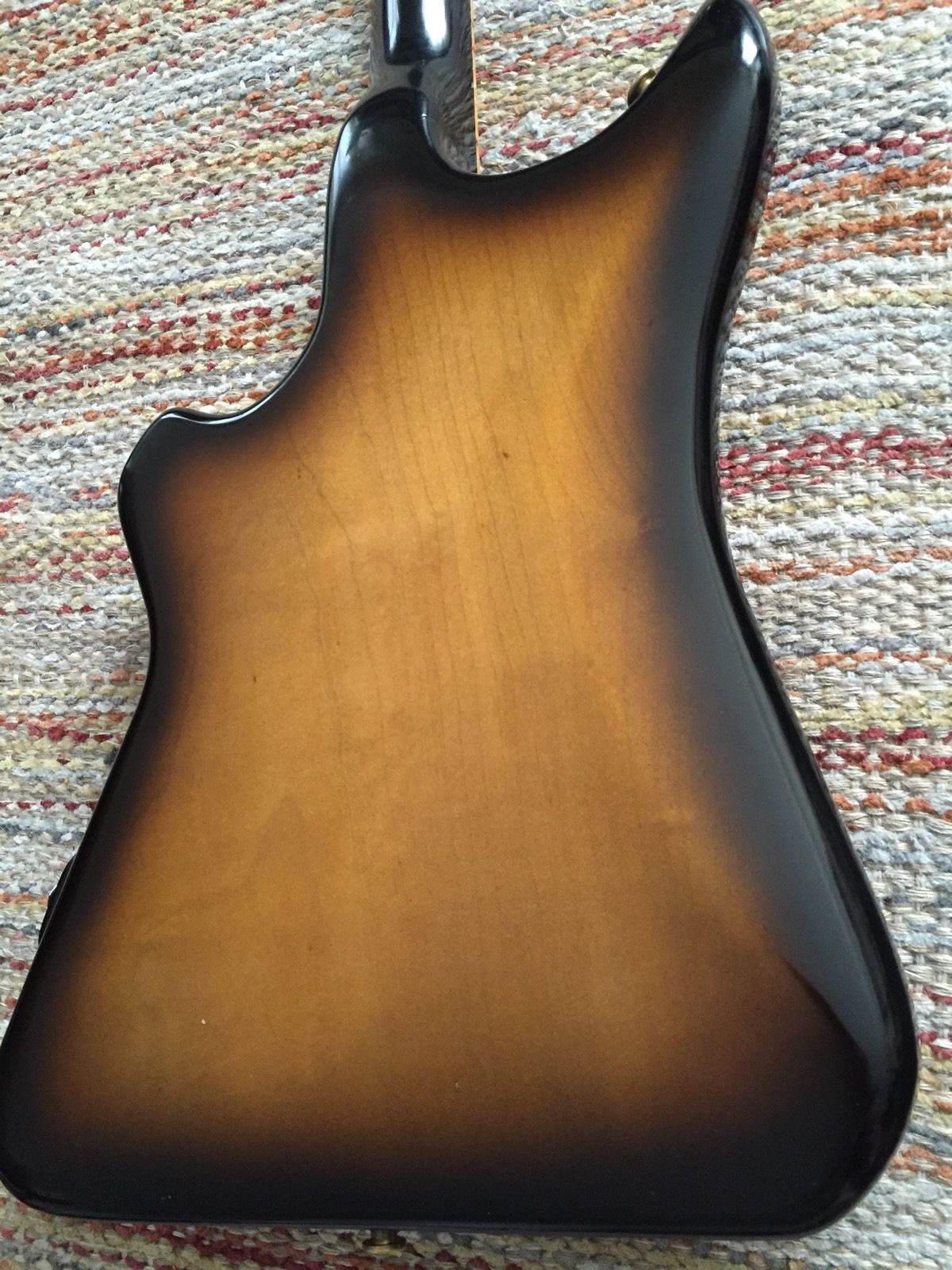
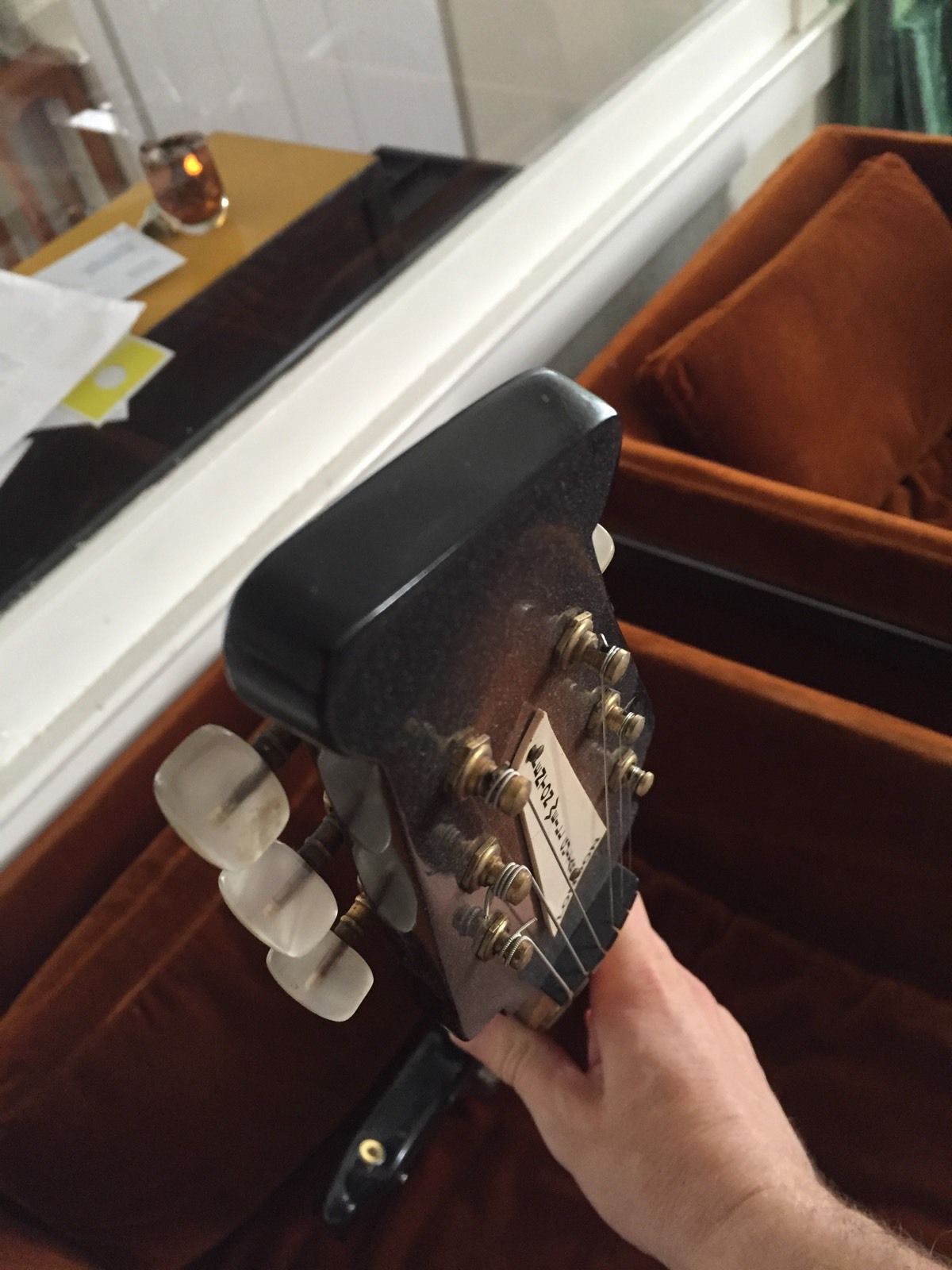
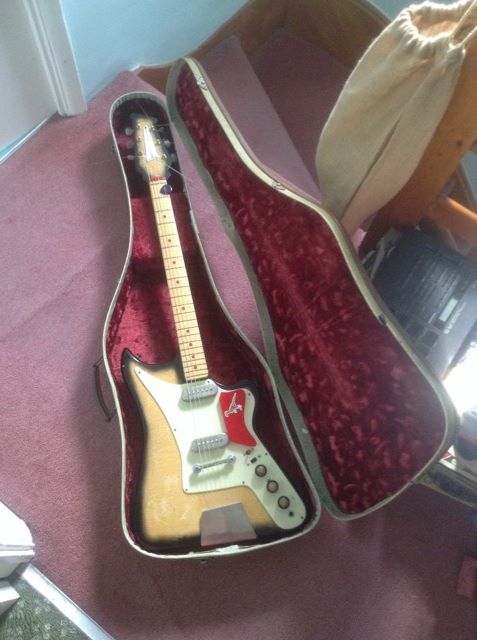
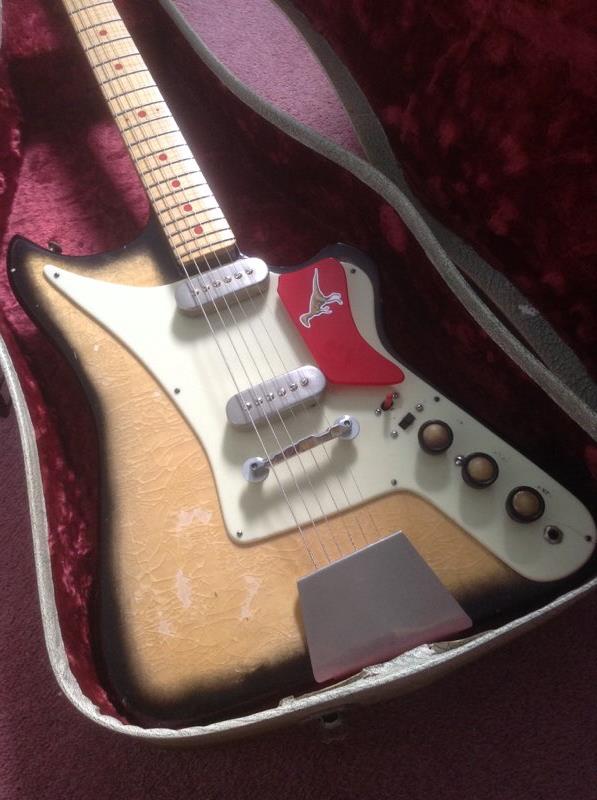
Circa mid-1961 RP1G
Non-vibrato fixed tailpiece example. Headstock badge outline reversed, points the other way!
Soft-heeled neck-joint, coupled with pickguard-mounted jack socket suggests that this guitar dates from mid-late 1961
Note: This example was restored and refinished, but retains original shaped case and Letraset control legends!
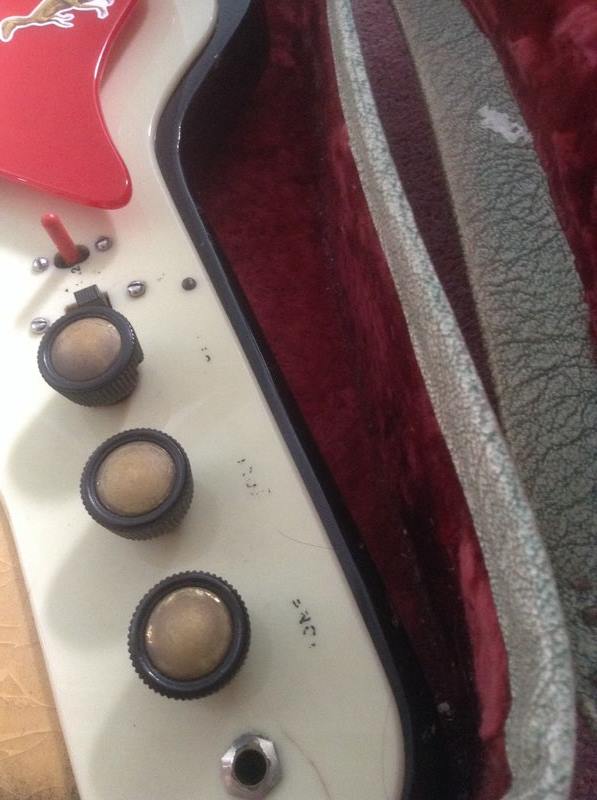
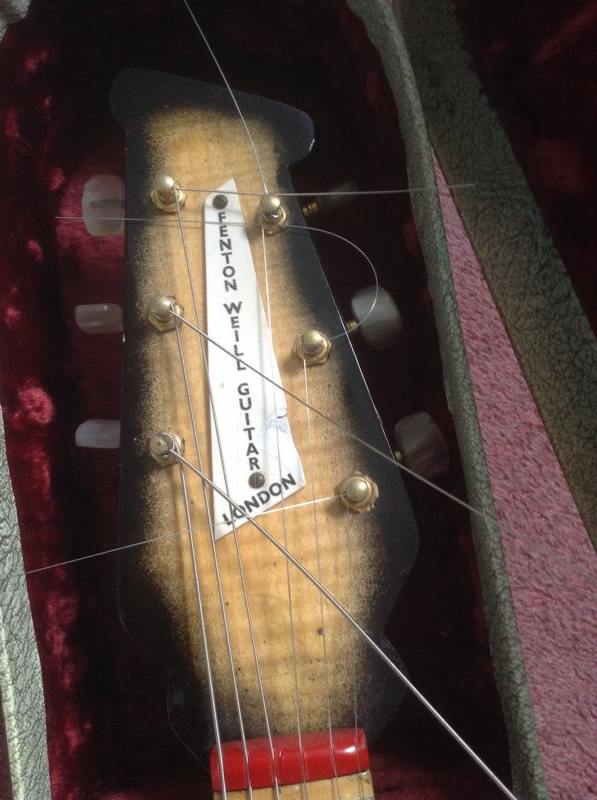
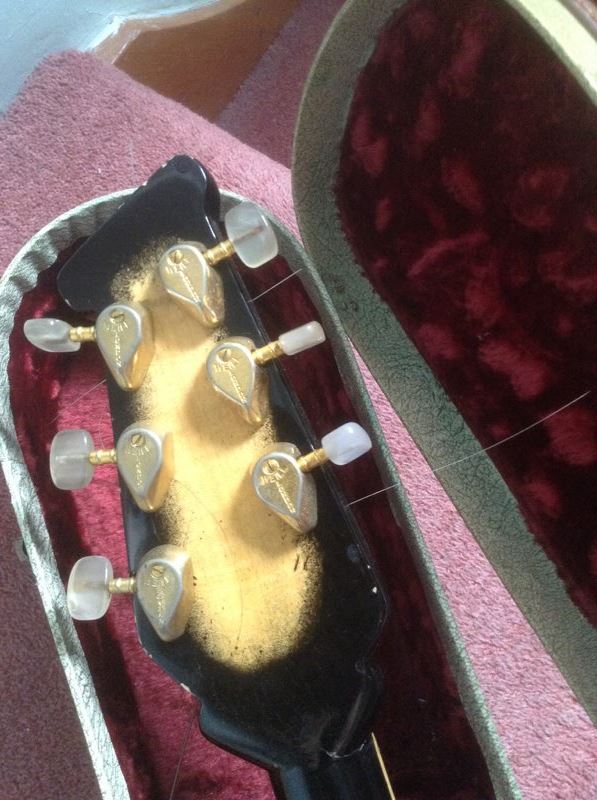
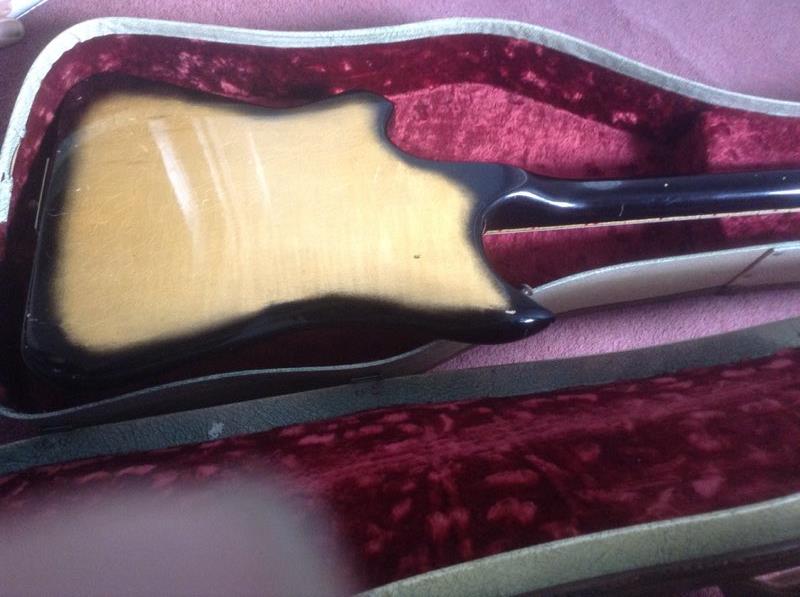
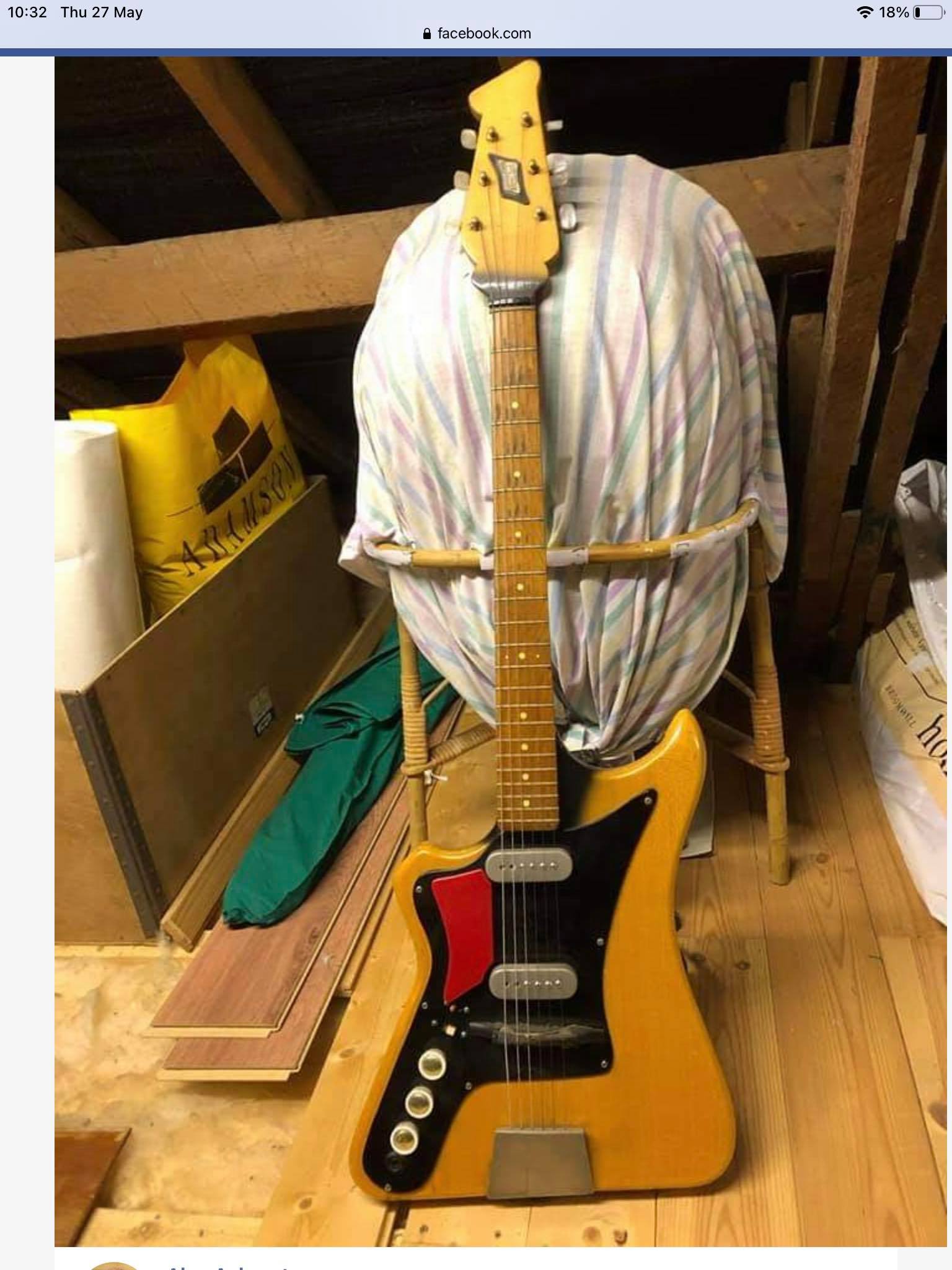
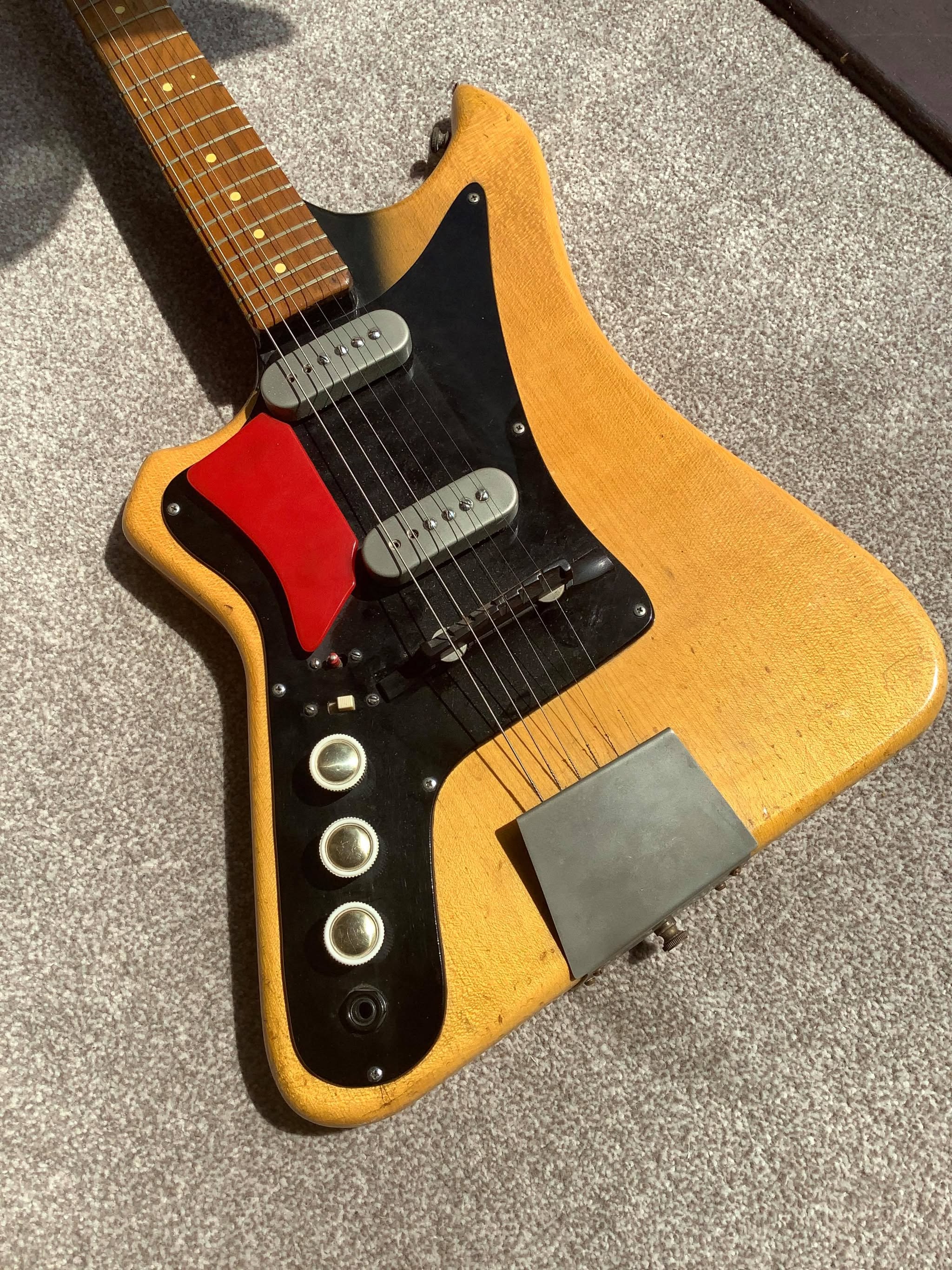
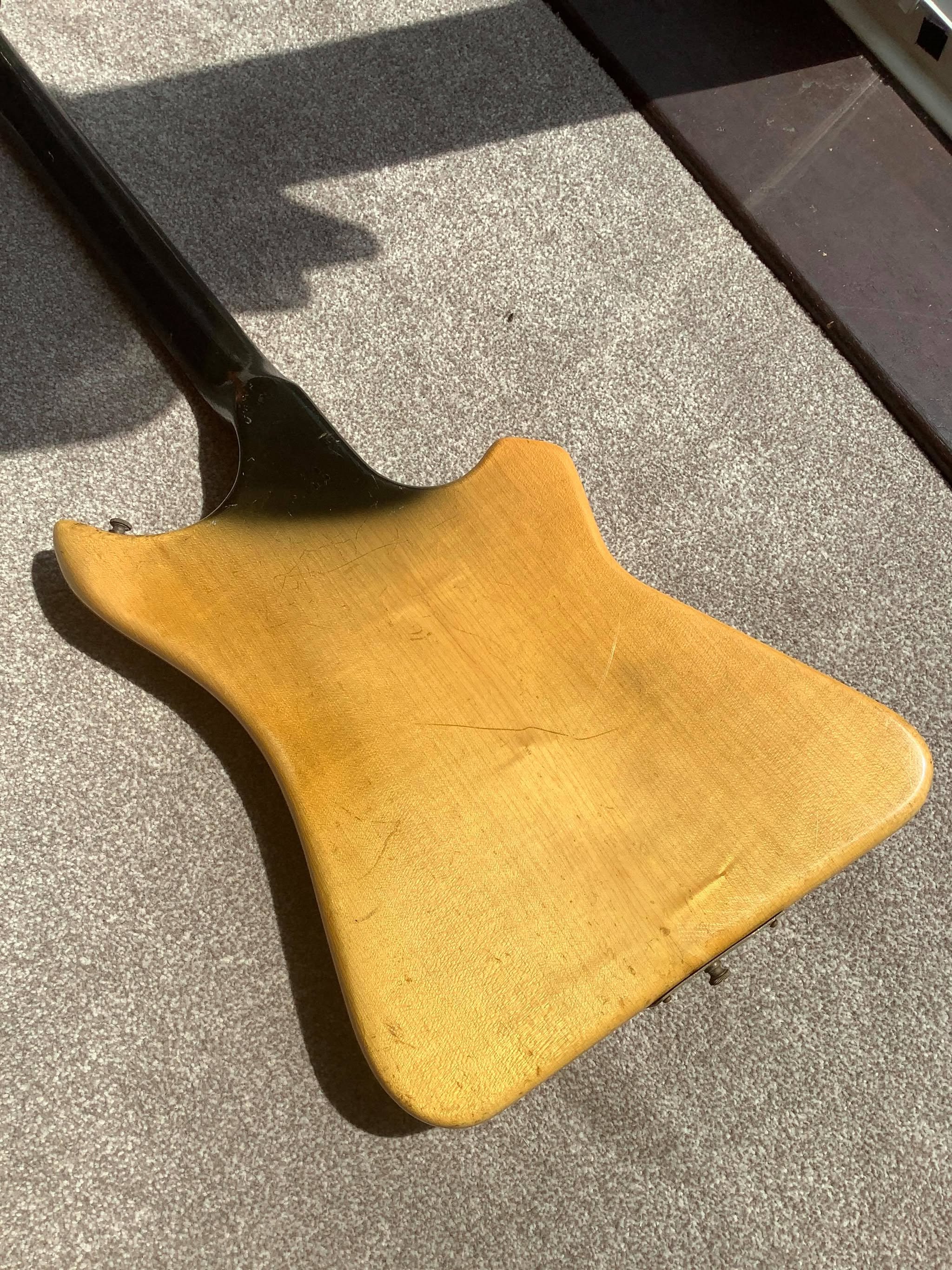
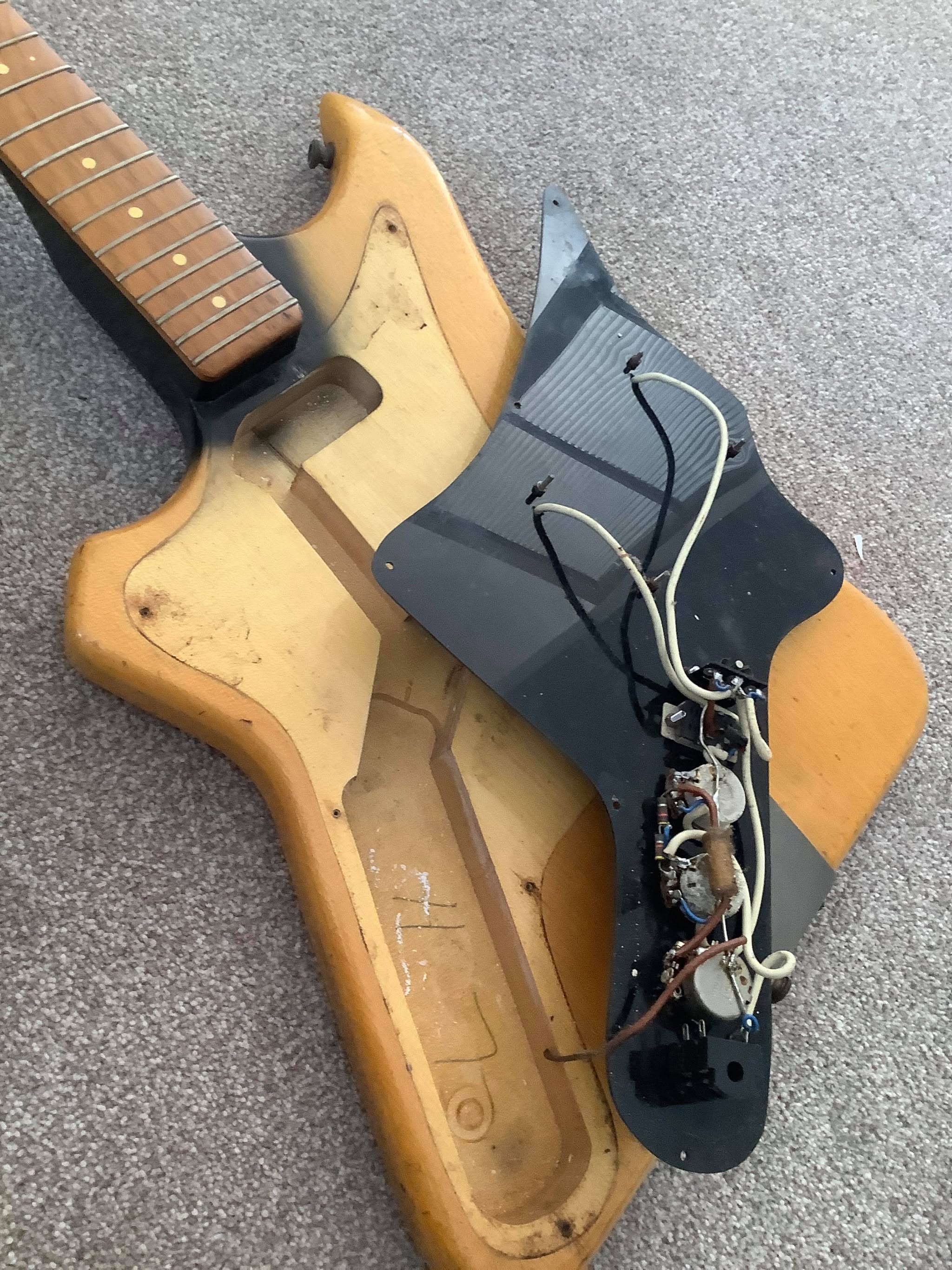
Mid-1961 RP1G Left-Handed
Non-vibrato fixed tailpiece example. Later Headstock badge on black acrylic plinth.
Soft-heeled neck-joint, coupled with pickguard-mounted jack socket suggests that this guitar dates from mid-late 1961

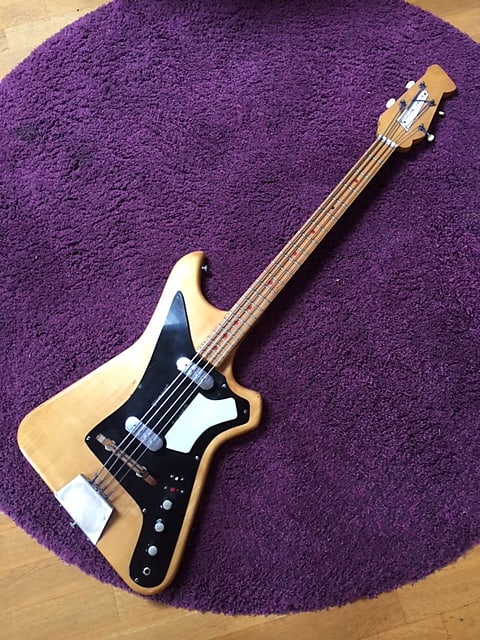
1960 RP1B Contrabass
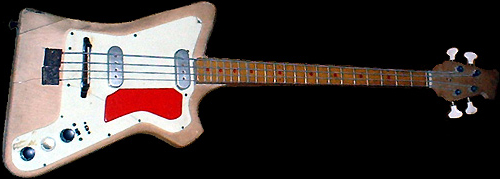
This Contrabass may be an earlier Burns Weill example. The body has been cut down.
It features the earlier non-extended ivoroid pickguard with a n earlier 'more squared' style of red-plate, and large non-Weill-branded closed-back pear-shaped Van Gent bass tuners with white buttons, which appear to be original.
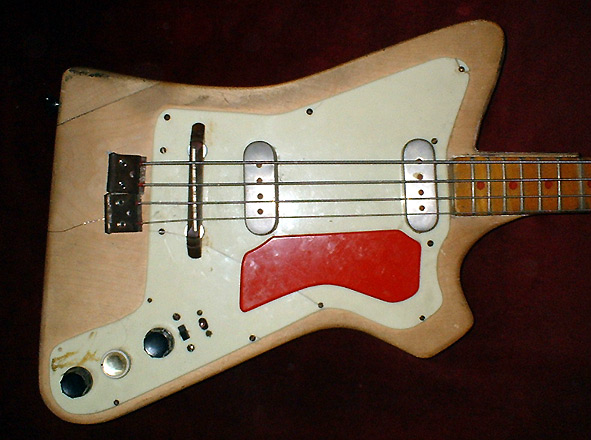
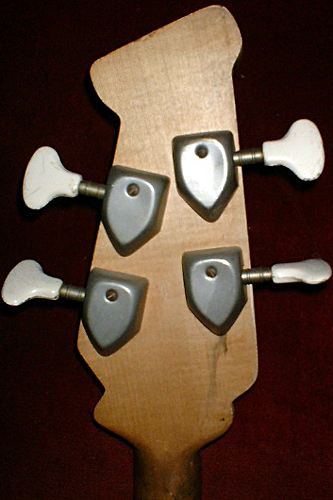
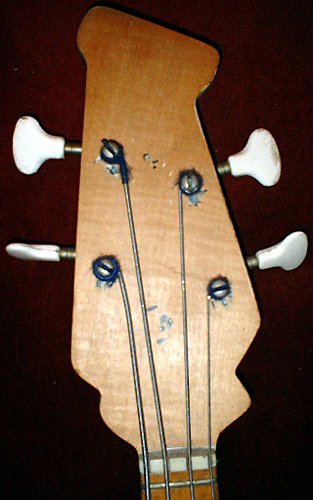
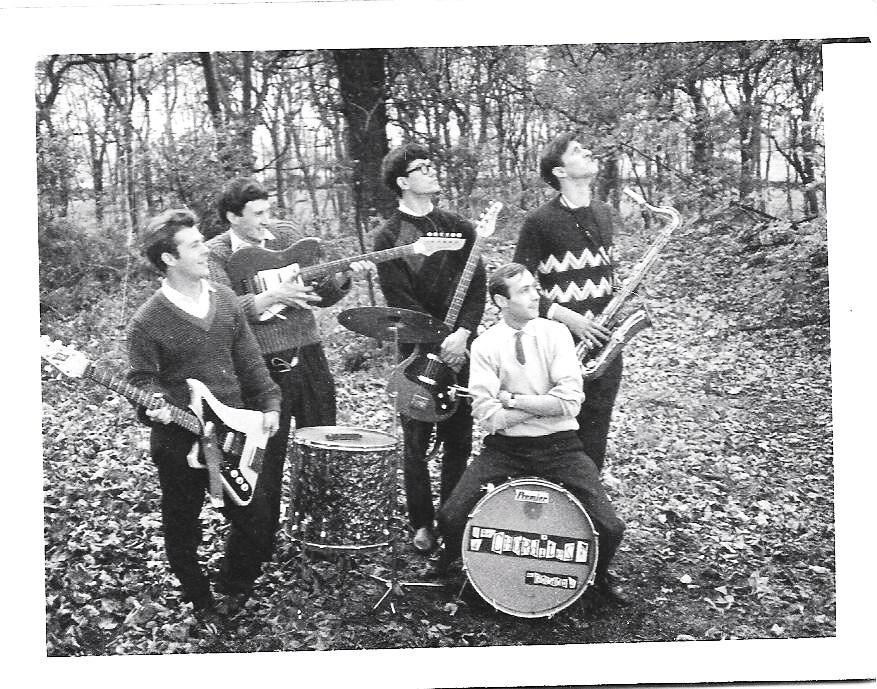
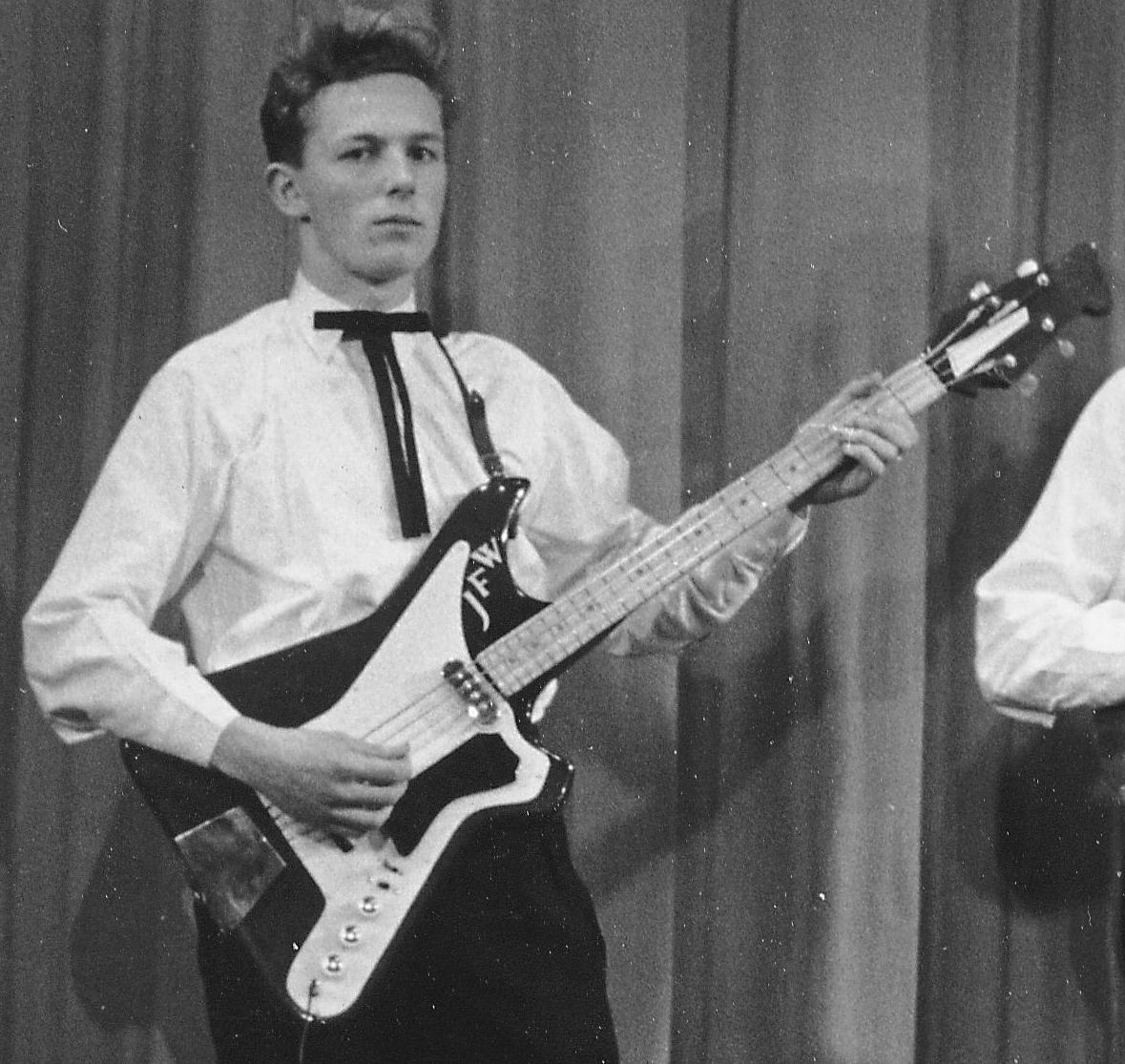
The Contrabass model was soon refined with changes to the shape of the body and pickguard in the bass-horn area, as in the following photo of Jeff White in 1961/62. Also, the jack socket position was moved from the side of the body to the pickguard.
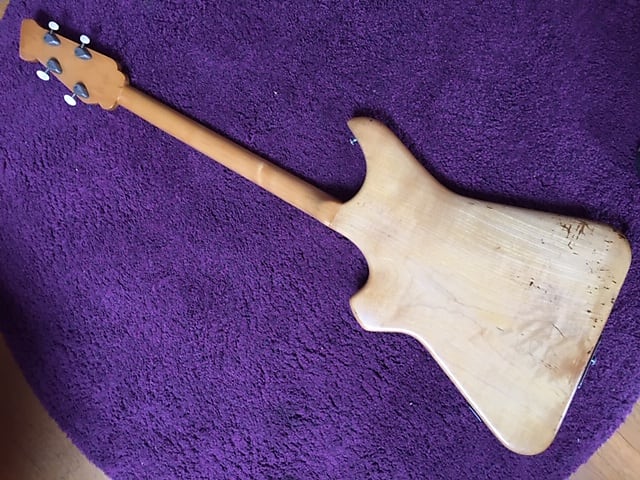
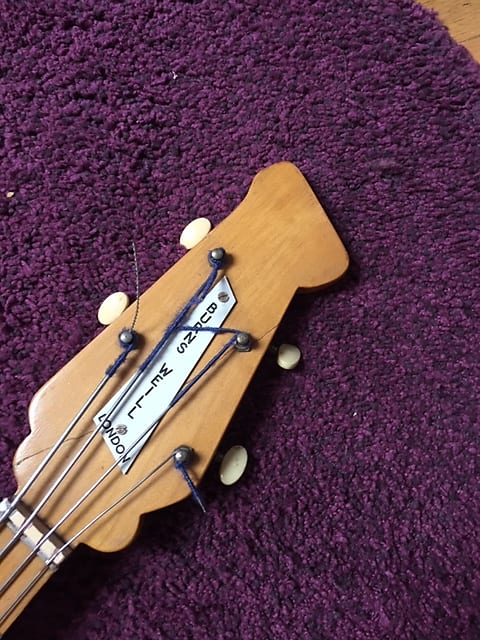
late 1960 RP1B Contrabass
While the headstock badge says Burns-Weill, and the lumpy headstock transition at the nut does suggest a Burns-made instrument, the more refined shape of the body, pickguard, secondary pickguard, and enclosed Van Gent tuner units are all of the style seen on post-1960 Fenton-Weill instruments. The jack socket being mounted to the pickguard is another indication of this being a later example. When photographed for the Burns Story book, it had a red secondary pickguard. The headstock nameplate is held on by screws, instead of escutcheon pins like the original, so I suspect the nameplate is a later reproduction, and should really say Fenton Weill.
1960 RP2/G "Short-Scale Streamlined Guitar"
The RP2/G "Short-Scale Streamlined Guitar" mentioned, but not pictured in the 1960 catalogue is again offered as the "RP2G Streamline De Luxe Electric Guitar" in Besson adverts dated March 1961, but again it is not pictured.
Derived from the earlier Burns-Weill Super Streamline RP2G, the only known example has evolved along a similar path to the RP1;
Body shape re-styled to two pointed and curvy body horns. Machine heads changed from open-backed Hofner tuners to enclosed Van Gent units branded "WEILL LONDON".
Later, the jack socket moved from the side to the pickguard, and the headstock shape was revised in late 1961 to a six-in-line style, but it appears that the RP2G was not officially Incorporated into the American Range, but instead became a budget model offered by DALLAS as the 'Tuxedo 6'; a short-scale, vibrato equipped 2 pickup guitar, without body contouring or bass-cut switch, and with simple open-backed Hofner tuners.
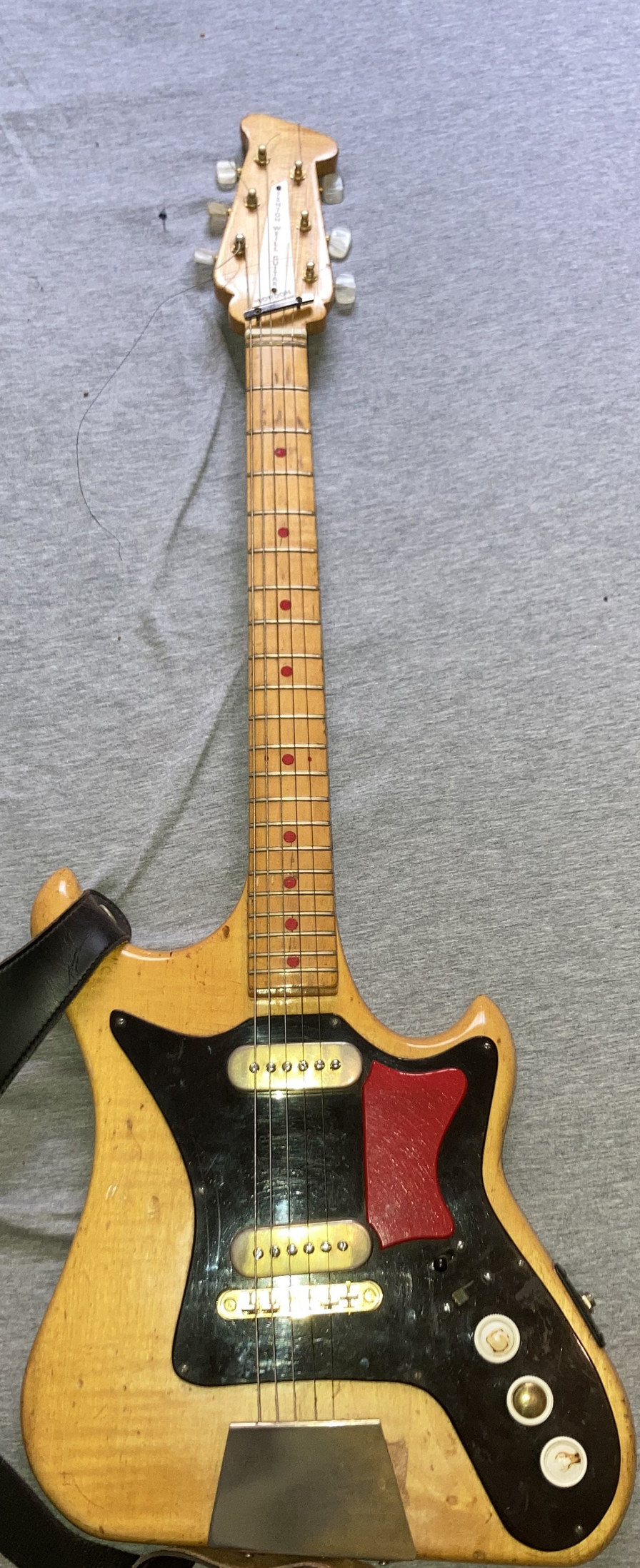
1960 RP2G Short-Scale Streamline Deluxe
Lumpy headstock/neck transition.
Headstock badge outline reversed, points the other way!
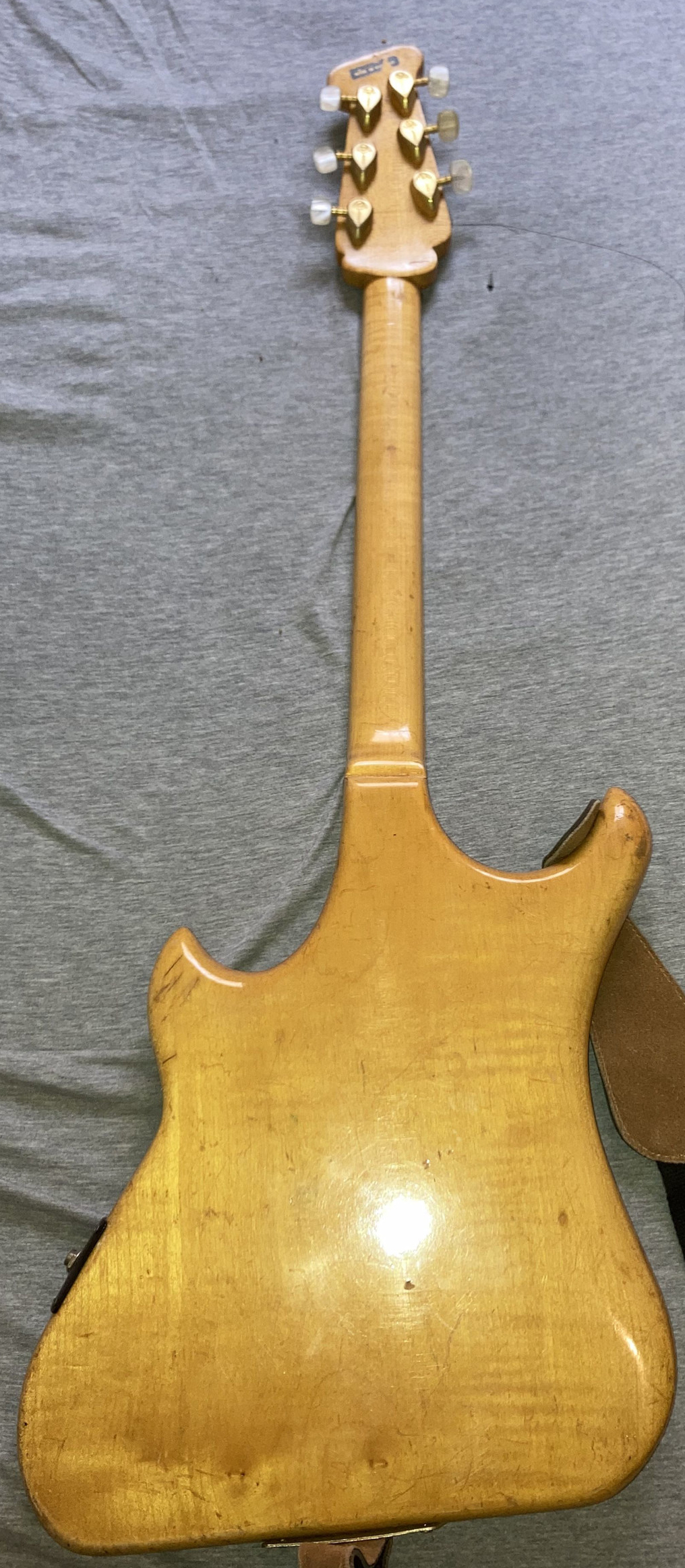
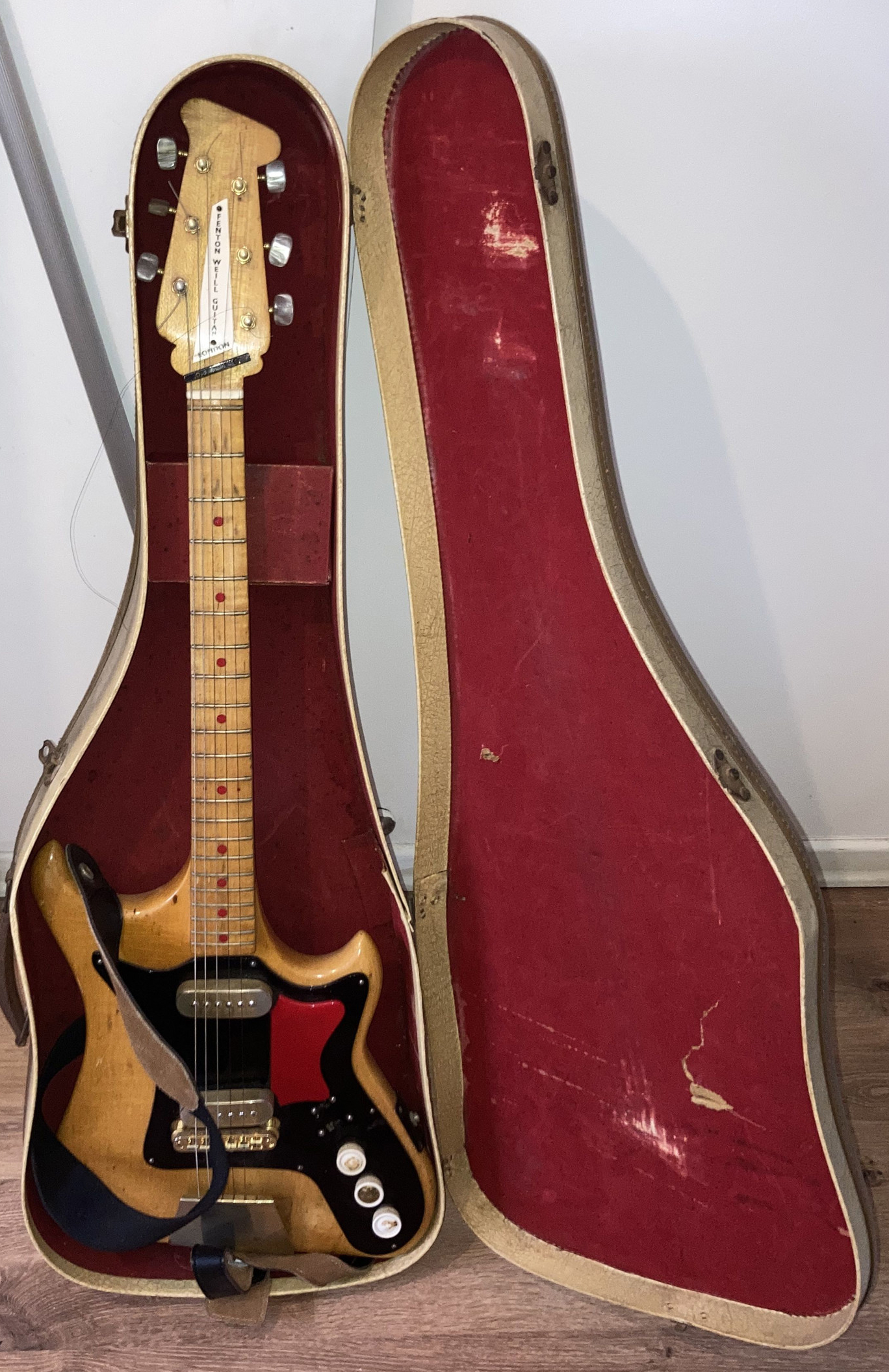
c.1962 RP2G Short-Scale Streamline
Some guitars of the type supplied to Dallas to market exclusively as "Tuxedo 6" were sold badged as Fenton-Weills. perhaps these were export-only models?
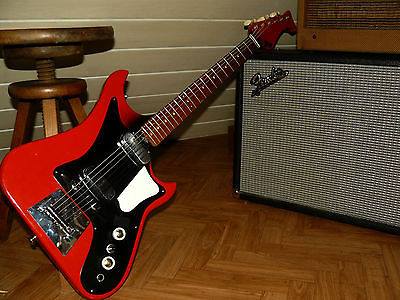
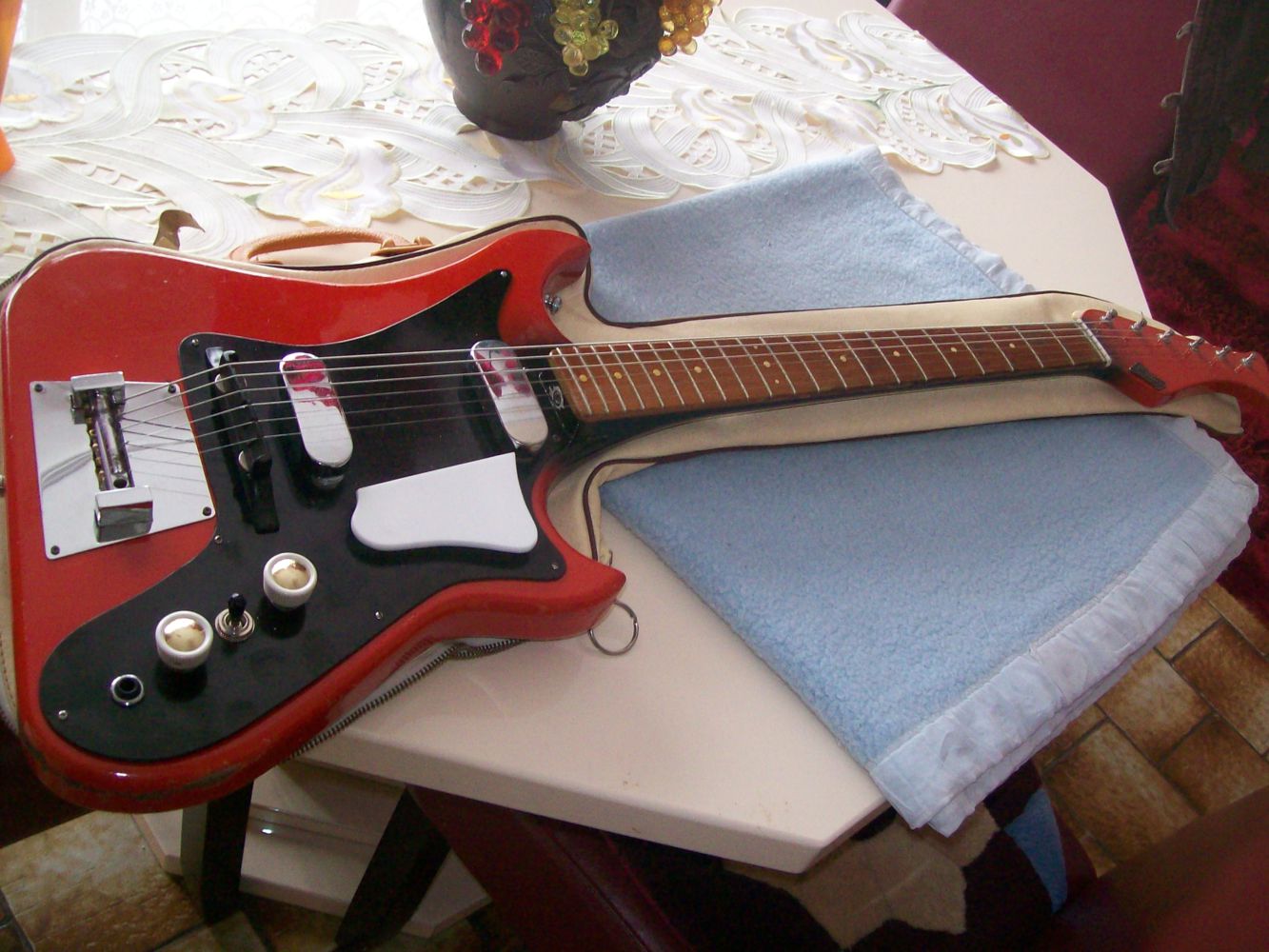
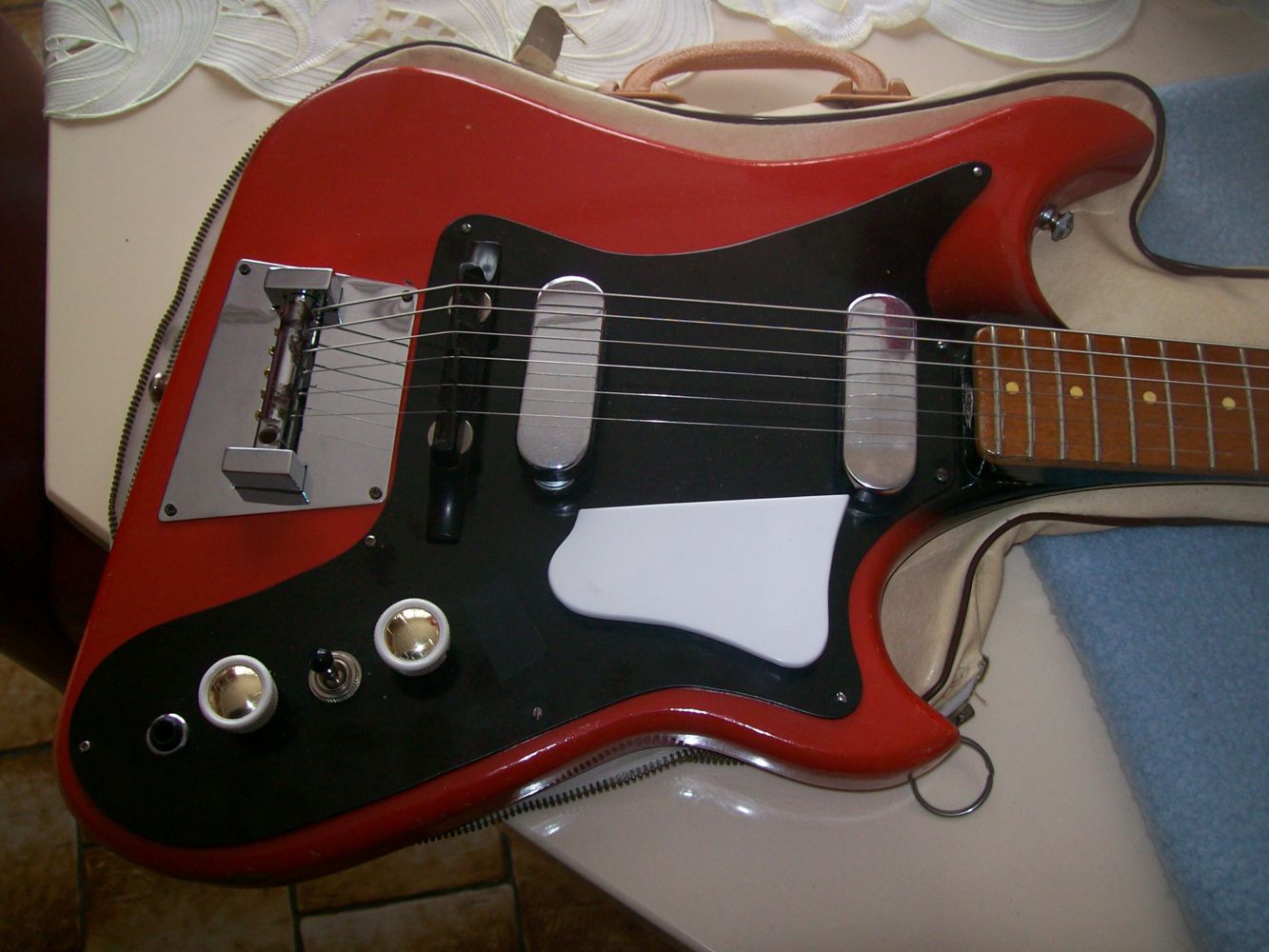
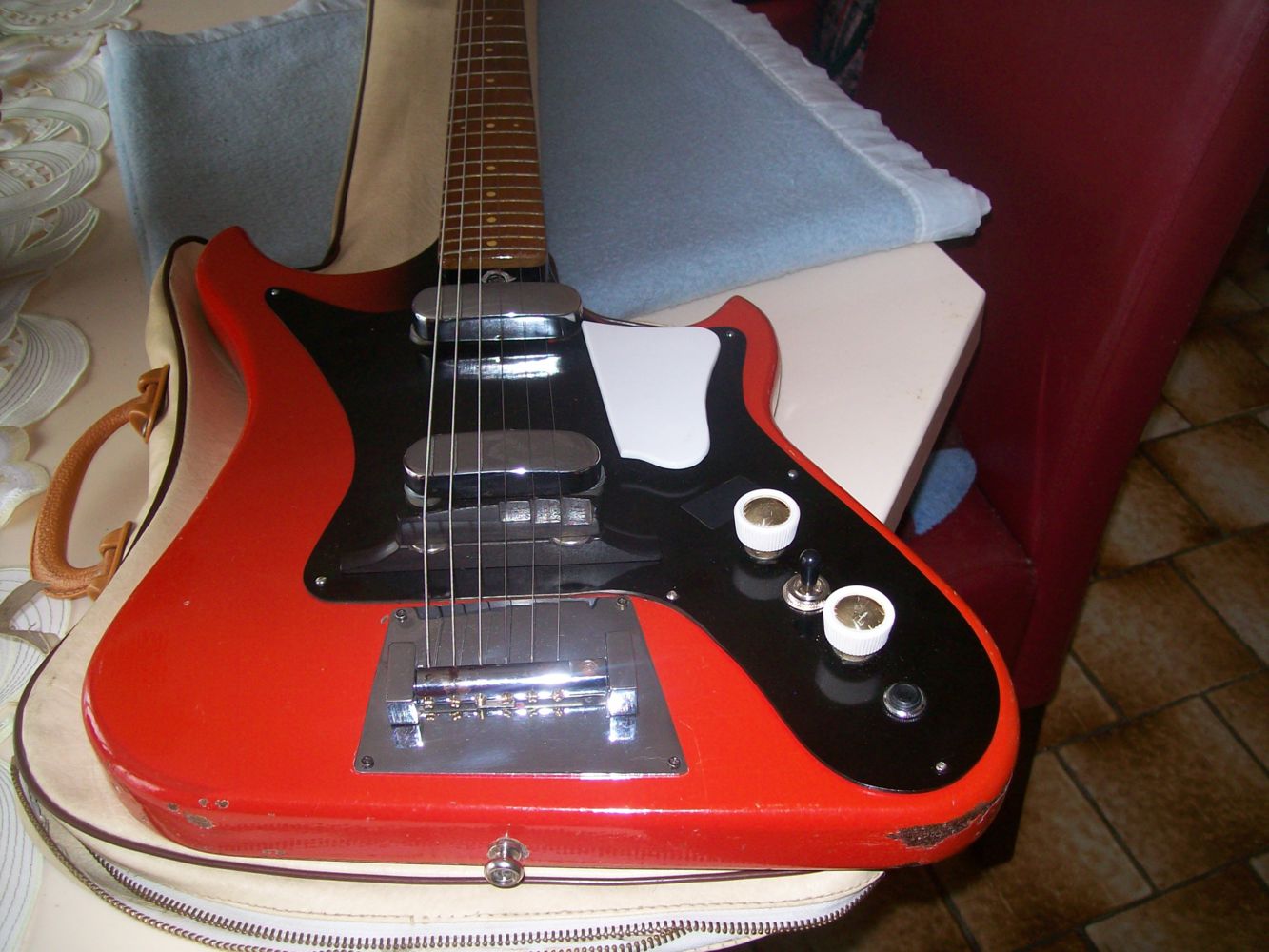
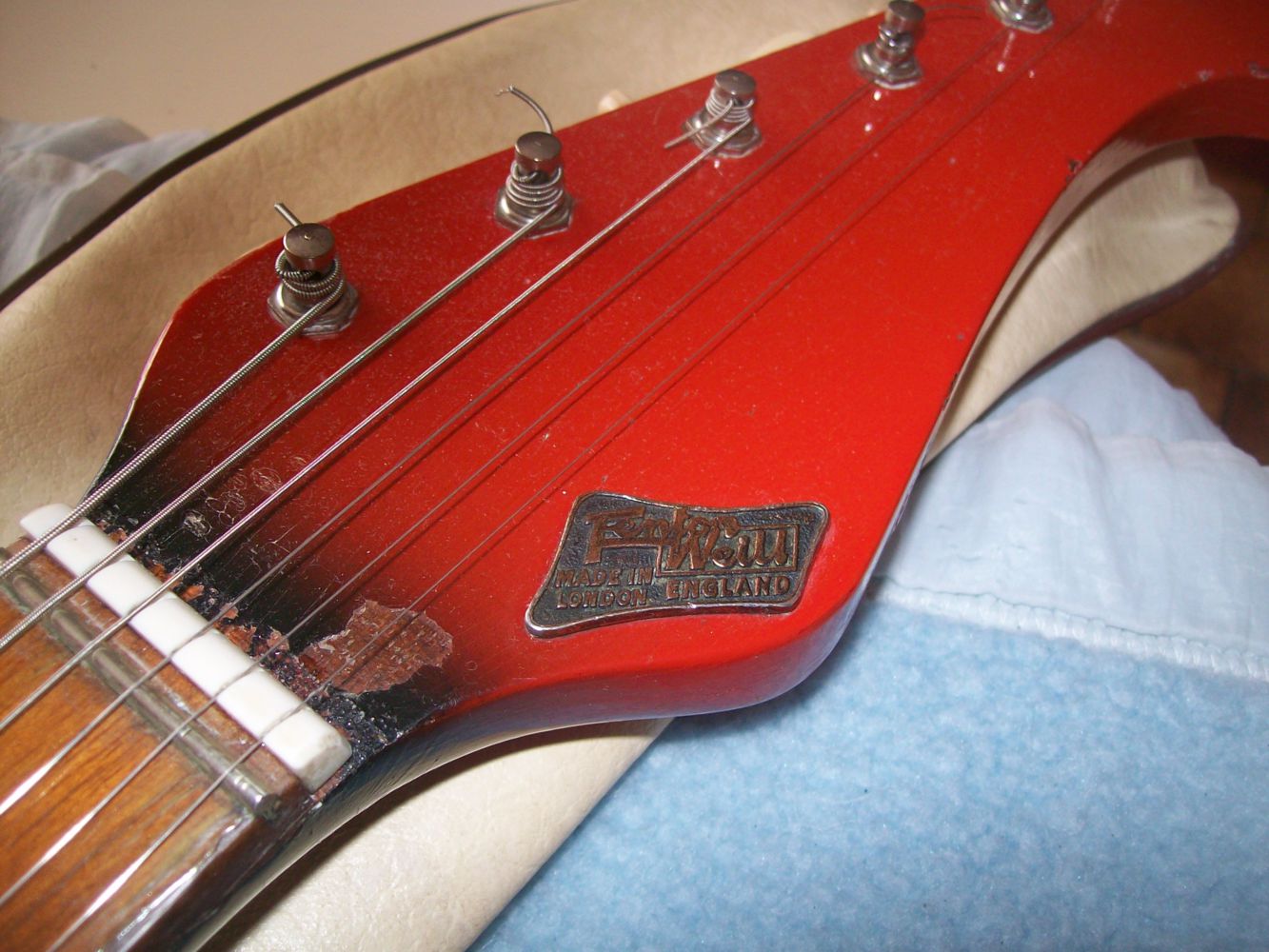
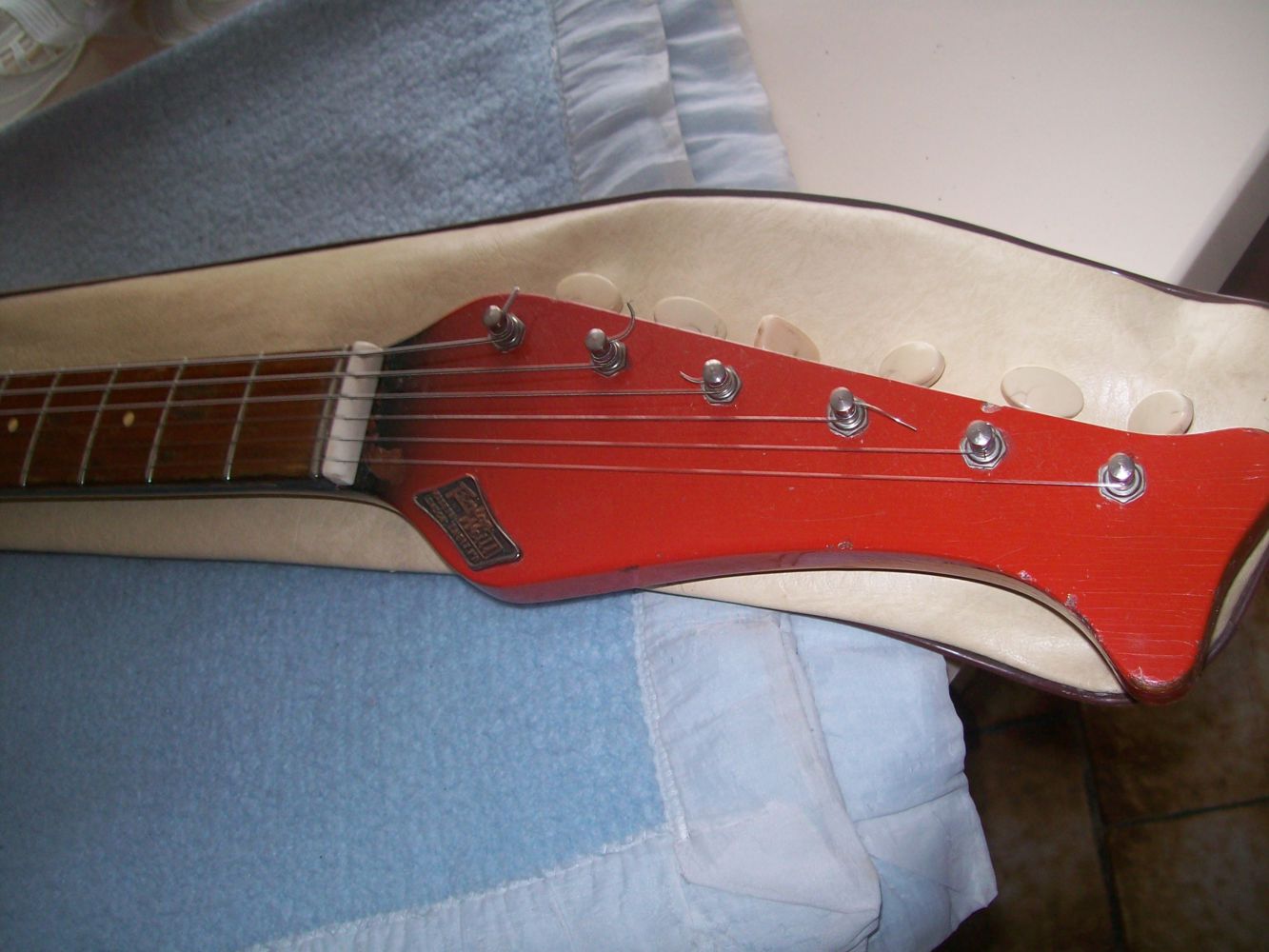
...And a Natural finish version. Pinholes in the headstock suggest that this once had a Fenton Weill badge?